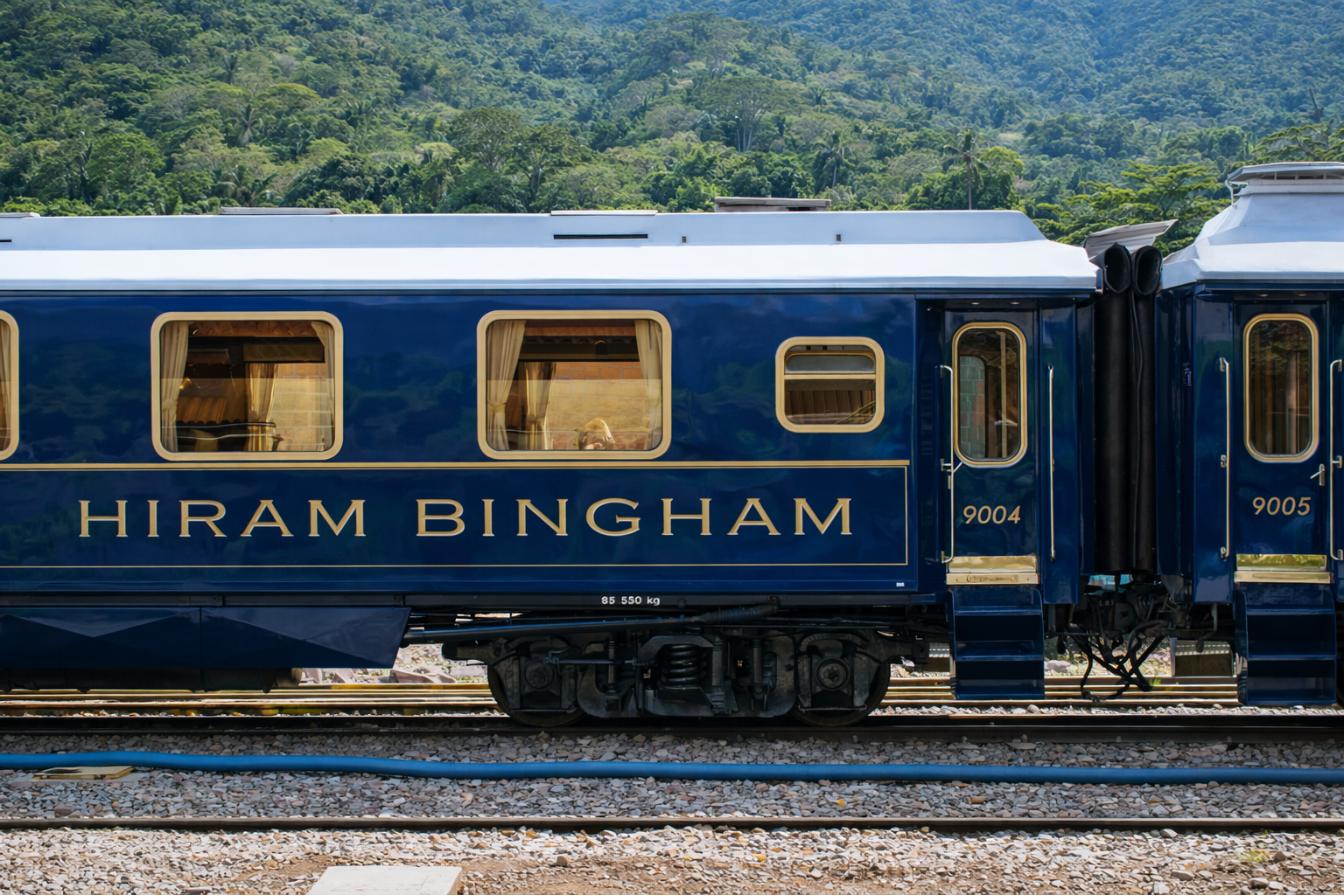
Cusco to Machu Picchu: Every Train Option Compared
Two rail companies, roughly eight service tiers, three ways out of Cusco, and one very famous blue-and-gold luxury train. Here is how every train to Machu Picchu compares, and where the Belmond Hiram Bingham sits on that ladder.
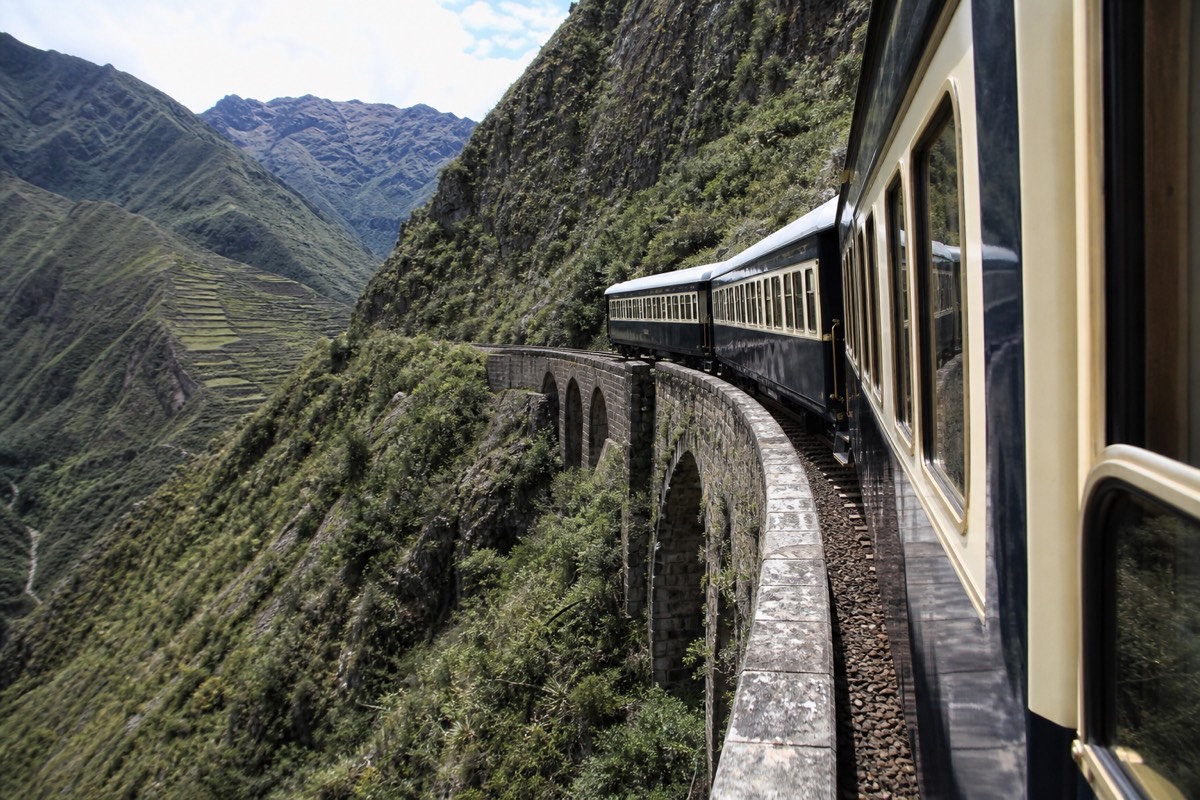
Getting from Cusco to the foot of Machu Picchu means a train, and the menu is longer than most first-time visitors expect. PeruRail and Inca Rail both run the line. Between them they sell everything from a plain panoramic-window carriage to a moving restaurant with a live band, and there is more than one place you can actually board.
This page lays out the whole ladder: who runs what, where each service departs, how long the ride takes, roughly what you pay, and why the Belmond Hiram Bingham sits at the very top. If you already know you want the luxury option, jump to the inclusions grid further down. If you are still weighing it against the cheaper daytime trains, read straight through and the picture fills in.
Which trains actually run from Cusco to Machu Picchu?
Two operators serve the route. PeruRail runs the Expedition, the Vistadome, the Vistadome Observatory and the luxury Belmond Hiram Bingham. Inca Rail runs the Voyager, the 360, the Prime and its First Class. That is roughly eight service tiers, from a budget reserved seat up to fine dining on rails at the Belmond end.
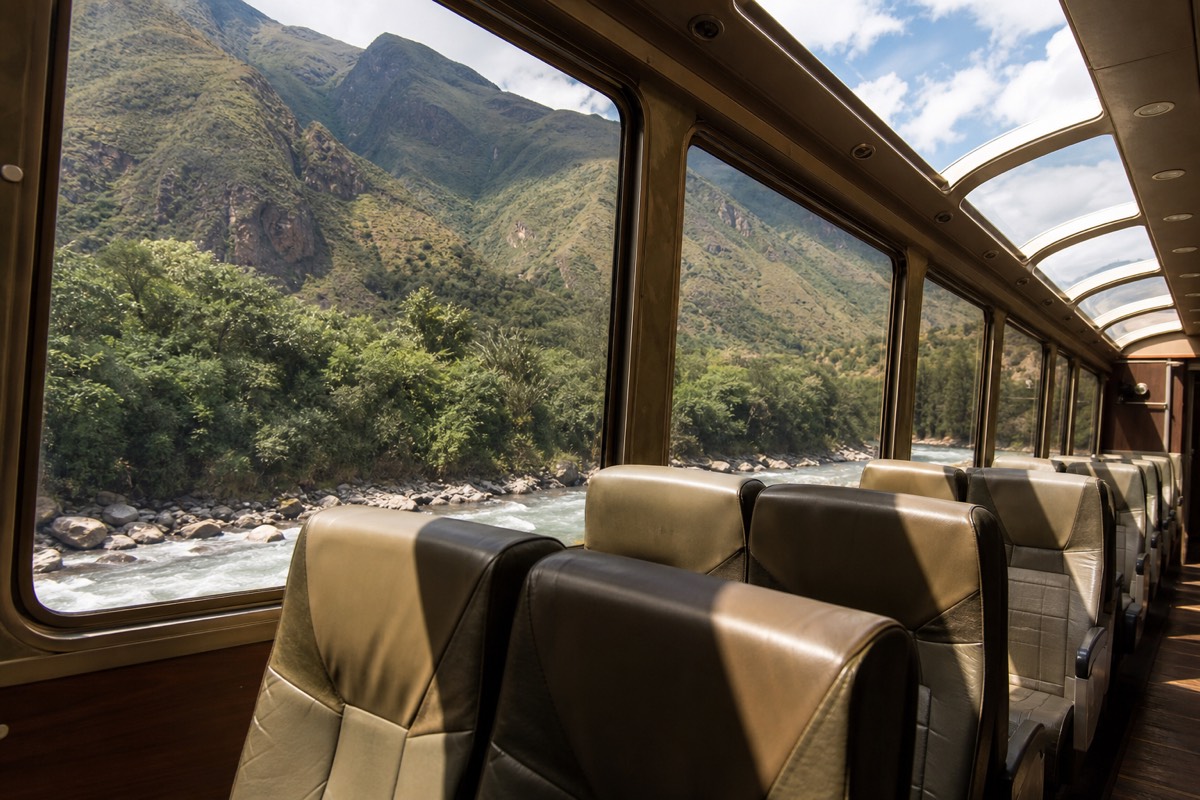
Think of it as a ladder rather than a straight yes-or-no. At the bottom sit the workhorse tourist trains that get you there in comfort and nothing more. In the middle are the panoramic services built around the scenery, with glass along the roof and open observation decks. At the very top is one train, the Hiram Bingham, that turns the ride itself into the main event.
The figures below are bands, not fixed quotes. Rail fares here move with the date, the direction of travel and the season, so read every price as a ballpark and confirm the live figure for the day you want. Fares for the train do not cover your citadel entry unless the ticket is sold as an all-inclusive bundle.
| Service | Operator | Tier | Rough one-way fare band (USD) | Best for |
|---|---|---|---|---|
| Expedition | PeruRail | Budget tourist | ~$65 to $115 | Getting there cheaply |
| The Voyager | Inca Rail | Entry | ~$70 to $125 | Flexible budget travellers |
| Vistadome | PeruRail | Scenic tourist | ~$95 to $175 | Big views without the luxury price |
| The 360 | Inca Rail | Panoramic observatory | ~$100 to $185 | Open-air deck and daylight scenery |
| Vistadome Observatory | PeruRail | Premium panoramic | ~$120 to $210 | Views plus an onboard show |
| The Prime | Inca Rail | Semi-luxury | ~$300 to $480 | A step below Belmond, dining car included |
| The First Class | Inca Rail | Luxury | ~$400 to $640 | Luxury option when the Hiram Bingham is full |
| Belmond Hiram Bingham | PeruRail / Belmond | Luxury flagship | ~$500 to $660 | The once-in-a-lifetime journey |
Two names appear at similar price points near the top: the Hiram Bingham and Inca Rail's First Class. They are not the same experience, and further down we pull the Belmond service apart feature by feature so you can see what the premium actually buys.
Where does the Cusco to Machu Picchu train actually leave from?
There are three ways to start: from Poroy on the edge of Cusco, from Ollantaytambo deep in the Sacred Valley, or on a bus-plus-train bimodal service that PeruRail runs during parts of the year. The Hiram Bingham has traditionally boarded at Poroy, about twenty minutes from the city, for a ride of roughly three and a half hours.
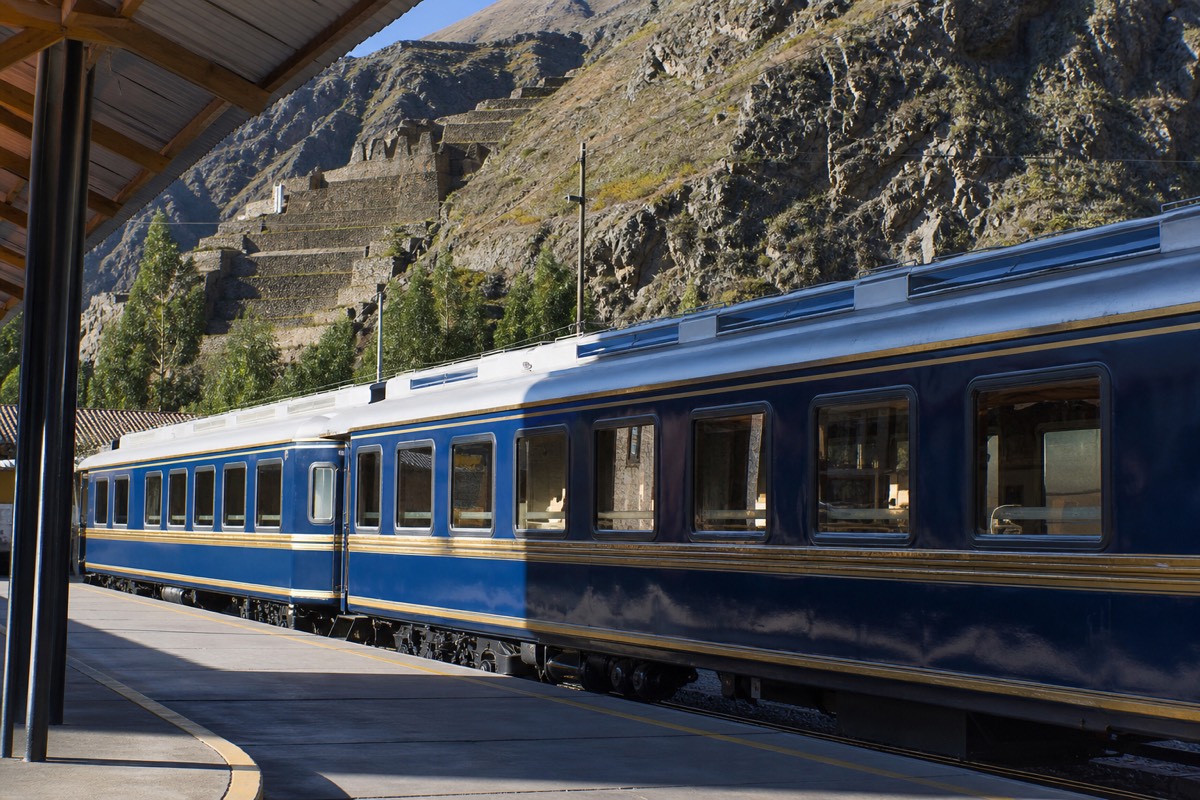
The choice of Poroy and Ollantaytambo stations is the single decision that shapes your day the most. Poroy sits just outside Cusco, so you board close to your hotel, but the train then covers the full distance, about three and a half hours each way. Ollantaytambo is well inside the Sacred Valley, which shortens the rail leg to under two hours, though you first face a road transfer of ninety minutes to two hours to reach it.
Departure points shift with the season and with track works. In some months PeruRail suspends Poroy departures and moves passengers onto a bimodal bus-and-train service via a valley station instead. Because your departure station can change, treat the schedule you see today as provisional and reconfirm it when you book.
Dropping down to Ollantaytambo also drops you a few hundred metres lower, which some travellers find gentler on a first full day while they are still shaking off altitude sickness in Cusco. If you are choosing purely on which platform is closest, the deeper mechanics of each departure station are worth a closer look before you commit.
| Where you start | How you reach it from Cusco | Train portion | Rough total to Aguas Calientes | Notes |
|---|---|---|---|---|
| Poroy | ~20 min taxi or transfer | ~3.5 hours | ~4 hours door to platform to town | Historic Hiram Bingham departure; seasonal |
| Ollantaytambo | ~1.5 to 2 hours by road | ~1 hr 45 min to 2 hours | ~4 hours including the drive | Most daytime departures start here |
| Bimodal (bus + train) | Bus from a Cusco pickup point | Short train leg from a valley station | ~3.5 to 4.5 hours total | PeruRail runs this in certain months |
How long does the journey take, and what does a full day look like?
On the Hiram Bingham from Poroy, count on about three and a half hours each way, and a round-trip day that runs close to twelve or thirteen hours from hotel pickup to your return. The train is deliberately unhurried, because the brunch, the bar and the scenery are the point, not speed.
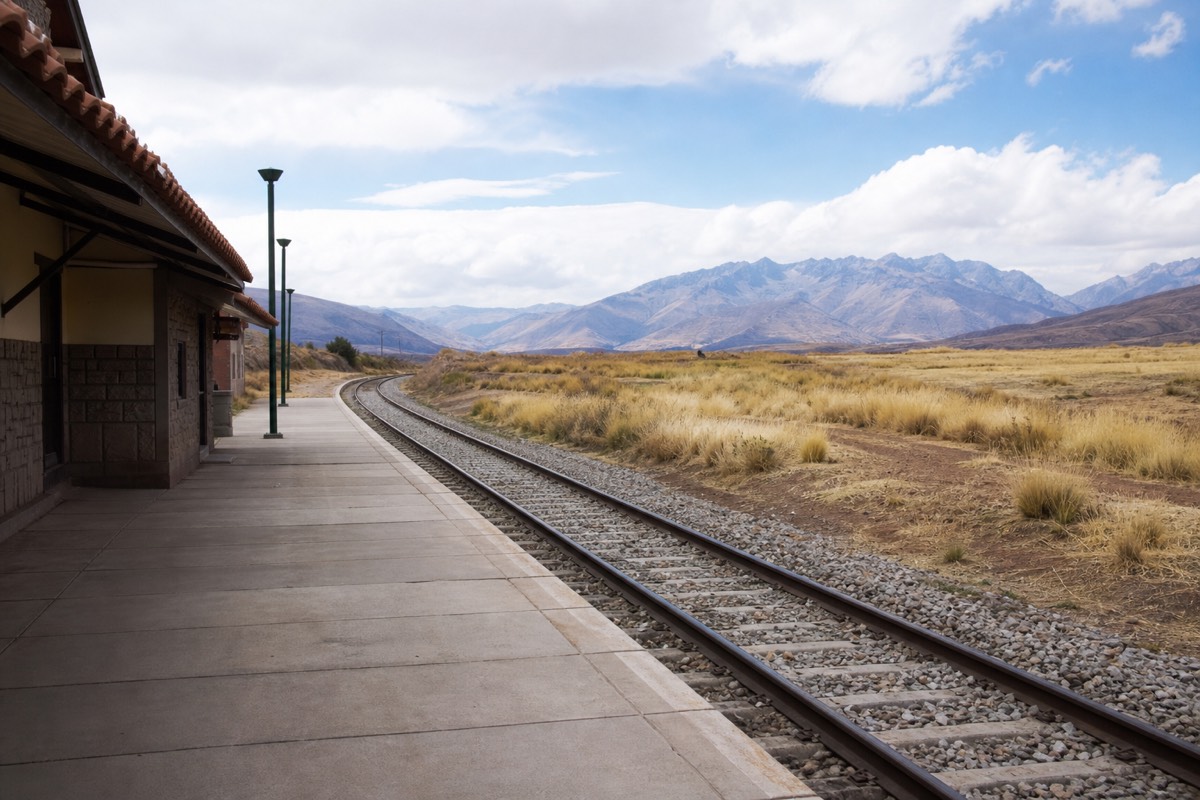
A single day is genuinely doable, and plenty of people treat this as a day trip to Machu Picchu from Cusco rather than an overnight in the valley. The trade-off is a long day with an early start. Seeing Machu Picchu in one day works well on the luxury train precisely because the meals and service turn the travel time into part of the trip rather than dead hours.
| Rough time | What happens |
|---|---|
| Early morning | Hotel pickup and transfer to Poroy station |
| Mid morning | Board the Hiram Bingham; brunch and open bar as the train climbs into the valley |
| Around midday | Arrive Aguas Calientes; short bus ride up the switchbacks to the citadel gates |
| Early afternoon | Guided tour of Machu Picchu, roughly two to two and a half hours, then free time |
| Late afternoon | Bus back down; board the return train with a meal and cocktails aboard |
| Evening | Arrive back at Poroy; transfer to your Cusco hotel |
One point trips people up: the train does not stop at the ruins. It ends in the town of Aguas Calientes in the valley floor. From there almost everyone takes the bus up to the citadel, a climb of about twenty-five minutes of hairpins, though the fit and stubborn can do the walk from the station to the citadel on foot uphill instead.
What does each train cost, and what does the price actually cover?
The single biggest source of confusion is the gap between a bare train fare and a packaged experience. A round-trip Hiram Bingham train fare on its own runs roughly a thousand to twelve hundred dollars, while the full bundle you see advertised, around fifteen hundred and eighty dollars, wraps in the citadel entry, the guide and every transfer. Daytime trains cost a fraction of either.
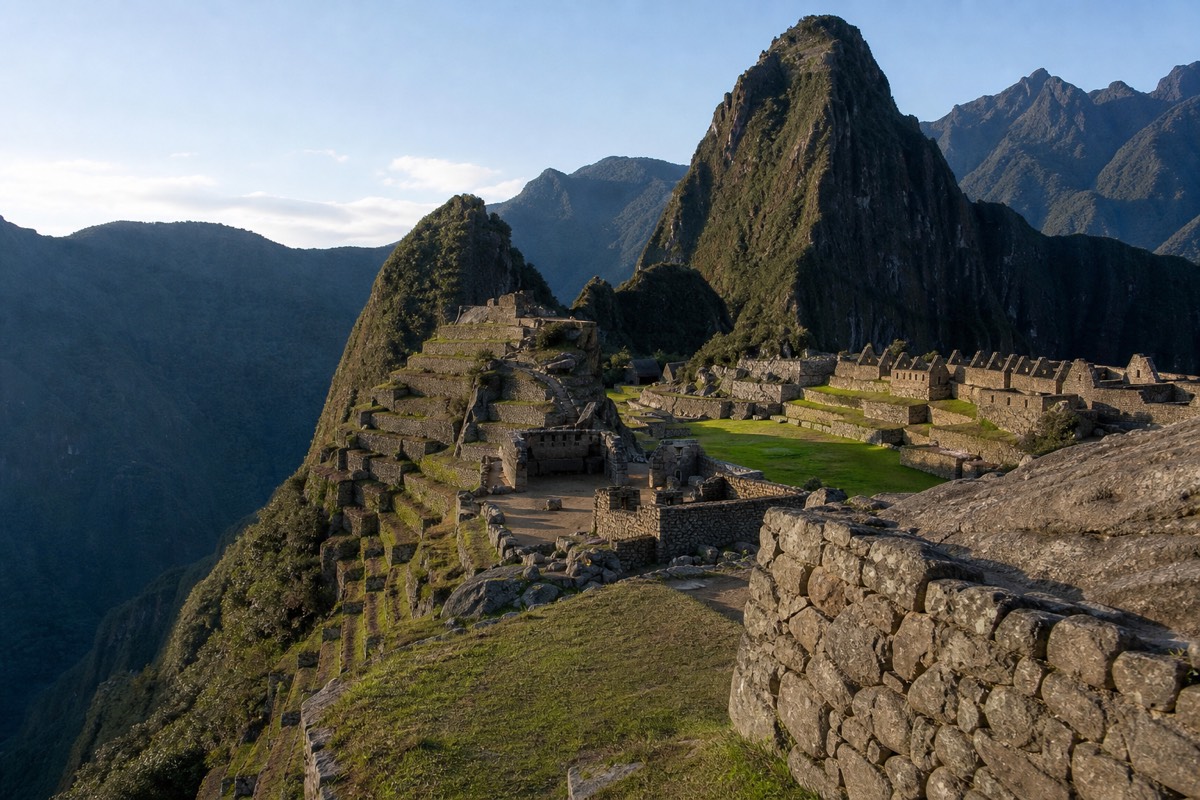
When people ask how much the train costs, they are usually mixing two different products. One is PeruRail's fare for a seat on the Hiram Bingham. The other is a tour package built around that seat. Understanding the cost of the Hiram Bingham ticket means separating the two, because the fare breakdown looks very different once entry, guiding and hotel pickups are added in.
The figure near fifteen hundred and eighty dollars on the booking listing is a bundle, not the raw train fare. It folds the round-trip Hiram Bingham, your Machu Picchu entrance, the guided tour and the transfers into one price, which is why it lands well above the train ticket alone. Check the live listing for today's exact figure, since it moves with the season.
The entrance ticket is the part first-timers forget. Your train fare almost never includes it on the daytime services, so you buy a timed citadel ticket separately. The 2026 standard adult foreign fee sits around 152 soles, roughly forty US dollars, with mountain add-ons costing more. A fee revision took effect on the first of May 2026, so read the official ticket price before you plan. Some travellers underestimate this and then wonder why PeruRail is so expensive, when in fact a chunk of a bundle price is entry, guiding and transfers rather than the rail seat.
| What you pay for | Rough cost | Inside the Hiram Bingham bundle? |
|---|---|---|
| Round-trip Hiram Bingham train fare | ~$1,000 to $1,200 | Yes |
| A daytime round-trip train fare | ~$130 to $400 depending on class | Not applicable, separate service |
| Machu Picchu entrance ticket (standard circuit) | ~152 soles, about $40 | Yes, a standard circuit is included |
| Bus, Aguas Calientes to the citadel and back | ~$24 round trip | Yes |
| English-speaking guide at the site | ~$25 to $60 in a group | Yes |
| Hotel transfers in Cusco | Varies | Yes |
What makes the Belmond Hiram Bingham different from the daytime trains?
The Hiram Bingham is PeruRail's luxury flagship, and it is a different category of thing. It carries two dining cars, a bar car and an observation car with an open deck. You get a gourmet brunch outbound, a meal and open bar on the return, a live Andean band, the citadel entry, a guided visit and every transfer, all in one fare.
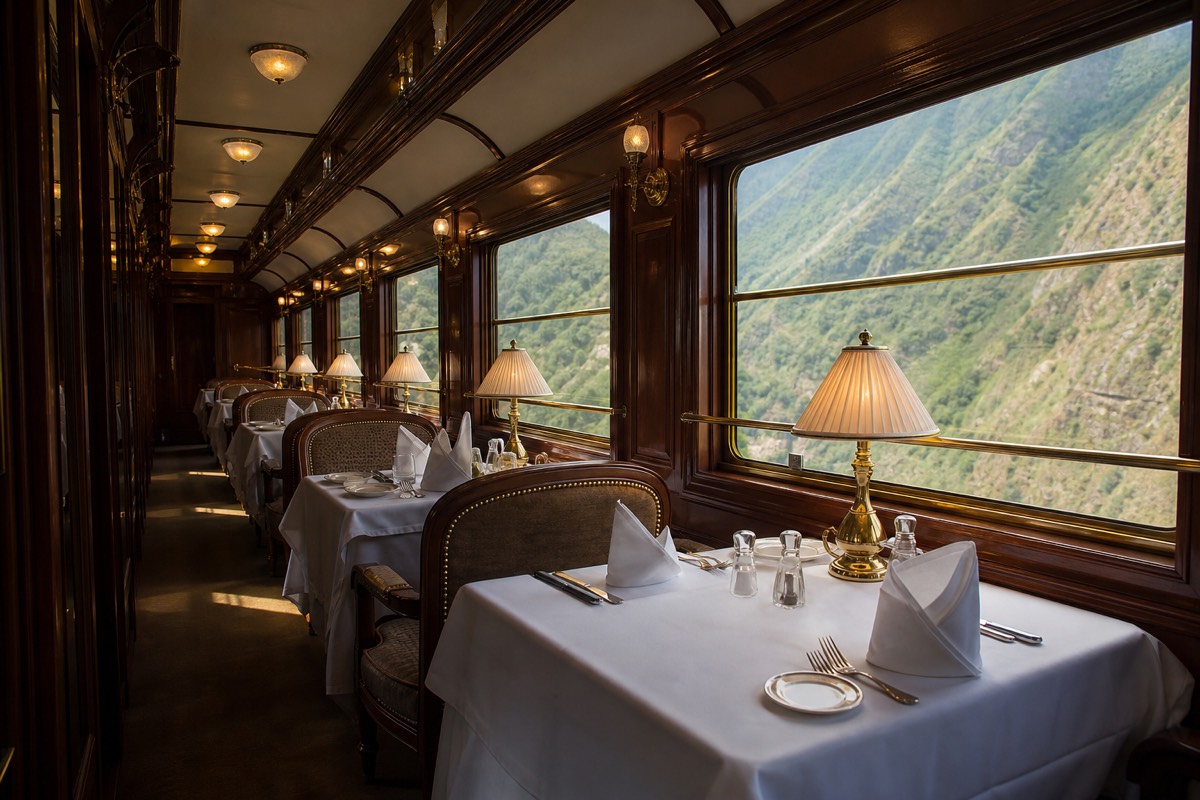
This is where it pays to compare the trains side by side. Against the Vistadome, which is a fine panoramic tourist train, and the Expedition service at the budget end, the Hiram Bingham is less a means of transport than a moving hotel restaurant. According to Belmond's own record of the train, it runs day-return trips from Poroy to Aguas Calientes, pours the local pisco in the bar car, and puts a live band on board.
There is no strict dress code on the train, but the tone is smart-casual and most passengers lean into the occasion. If the meals and the band are the draw, this is the tier for you. If you mainly want the scenery through big windows and would rather spend the difference elsewhere, the honest question is whether the panoramic train is worth it for your trip instead.
| Feature | Hiram Bingham (luxury) | Vistadome (scenic) | Expedition (budget) |
|---|---|---|---|
| Seating | Elegant armchairs with tables | Comfortable seats, big windows | Standard reserved seats |
| Windows | Large side windows, open deck car | Panoramic sides and roof | Standard windows |
| Meals | Gourmet brunch out, full meal back | Snack or light bite | Snack service, or none |
| Drinks | Open bar, pisco, cocktails | For purchase | For purchase |
| Entertainment | Live band and fashion show | Music on some departures | None |
| Guide at the citadel | Included | Not included | Not included |
| Entrance ticket | Included, standard circuit | Not included | Not included |
| Transfers | Included both ends | Not included | Not included |
| Feel | Small, exclusive, unhurried | Busy but scenic | Functional |
How does Inca Rail compare if you skip the luxury train?
Inca Rail is the other operator, and it runs its own ladder: the Voyager at the entry end, the 360 with an open-air observatory car, the Prime with a dining car and VIP transfer, and a First Class with fine dining and wine pairings. It works mostly out of Ollantaytambo, with bimodal bus-and-train options from Cusco.
If your dates are tight or the Hiram Bingham has sold out, Inca Rail is the natural fallback. Its All-Inclusive fares bundle the train with citadel entry, the bus and a guided tour, which mirrors the convenience of the Belmond package at the top tier without the same headline fare. Comparing the price of a ticket across the two operators at the same tier tends to land close, so the deciding factor is usually the departure point and the onboard style rather than a few dollars.
| Inca Rail service | Tier | Standout feature | Best for |
|---|---|---|---|
| The Voyager | Entry | Panoramic windows, Andean music, snacks | Value-focused travellers |
| The 360 | Panoramic | Open-air observatory car | Photographers and view chasers |
| The Prime | Semi-luxury | Dining car, priority boarding, VIP transfer | Comfort without the top price |
| The First Class | Luxury | Fine dining, wine pairings, bar-lounge car | A luxury ride when Belmond is booked out |
Which train suits which traveller?
Match the train to what you actually value. If the journey is the treat, take the Hiram Bingham. If you want the views on a sensible budget, take a panoramic service. If you only need to reach the ruin, the Expedition or the Voyager does the job. Families, budget backpackers and honeymooners rarely want the same carriage.
Timing plays into this too. The best time to visit Machu Picchu, broadly the drier months from May to September, is also when the luxury seats vanish first, so the more premium your pick, the earlier you book. Anyone curious about the explorer the train is named after can read his story separately, but the practical choice comes down to the grid below.
| You are | Best pick | Why |
|---|---|---|
| Marking a special occasion | Belmond Hiram Bingham | The full day is handled and the ride is the event |
| Chasing views on a budget | Vistadome or the 360 | Panoramic glass without the luxury fare |
| Backpacking on a tight budget | Expedition or the Voyager | Reliable, cheapest way there |
| Short on time | Any service from Ollantaytambo | Shorter rail leg, more hours at the ruin |
| Wanting semi-luxury without Belmond prices | Inca Rail First Class or Prime | Dining and comfort a step down in cost |
How do entrance tickets, circuits and altitude fit into your train choice?
The train only gets you to the base. You also need a timed Machu Picchu entrance ticket for a specific circuit, and you should factor in the altitude before your first climb. The Hiram Bingham bundle includes a standard-circuit ticket and a guide, so luxury-train passengers can skip that separate purchase.
The citadel now runs on set routes. There are three main circuits, an upper panoramic route, a classic middle route and a lower route, each with fixed paths and a timed entry slot. Deciding which circuit to book matters as much as the train, because it fixes what you actually see and how long you have. If you are handling your own tickets rather than riding a bundle, read up on the Machu Picchu entrance tickets and circuits before you lock a date.
Altitude is the other quiet factor. Cusco sits at about 3,399 metres, high enough that many visitors feel the thin air, while Aguas Calientes down in the valley is only around 2,040 metres. Spending a day or two to acclimatise in Cusco before you travel, drinking water and going easy on alcohol, makes the whole trip more comfortable. Travellers who want more than a day or two to adjust sometimes skip the direct flight into Cusco altogether and ride overland instead: Peru Hop's hop-on hop-off buses connect Lima, Paracas, Huacachina, Nazca, Arequipa, Puno and Cusco, so the altitude gain happens gradually over several days rather than in one flight. Because weather also swings hard between the dry season versus the wet season, the month you pick changes both your views and your odds of clear skies at the top.
Put together, the train, the ticket, the circuit and the altitude are four separate decisions that add up to one trip. The luxury route folds most of them into a single booking, which is the whole appeal. When you are ready to line up dates, fares and seats in one place, Hiram Bingham Train Tickets pulls the booking together for you.