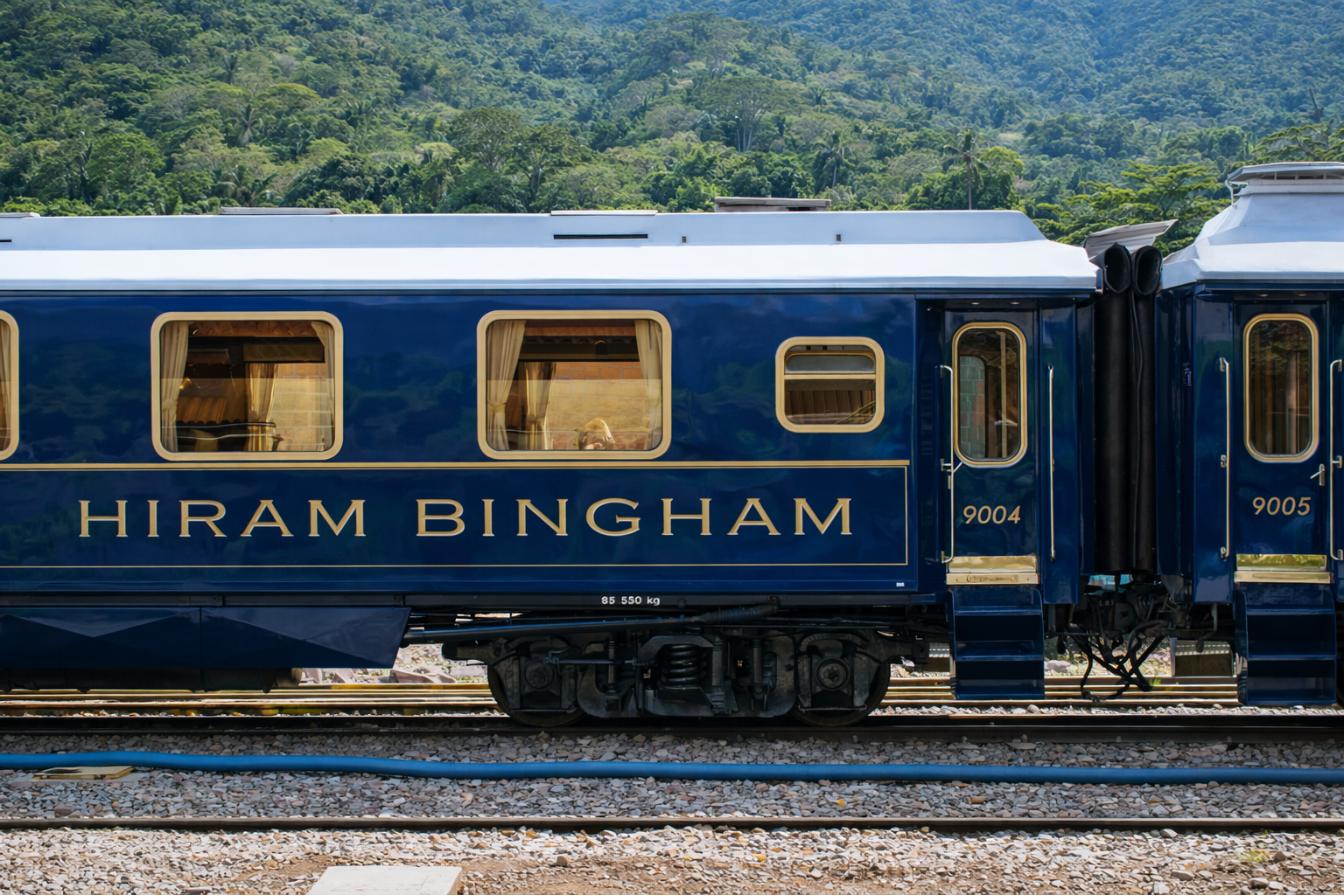
Poroy vs Ollantaytambo: Hiram Bingham Departure Stations Explained
Almost everyone assumes the Belmond Hiram Bingham pulls out of the Sacred Valley like the cheaper daytime trains. It usually does not. Here is where it really starts, how you reach it, and why the station you leave from quietly shapes your whole trip.
Which station does the Hiram Bingham actually leave from?
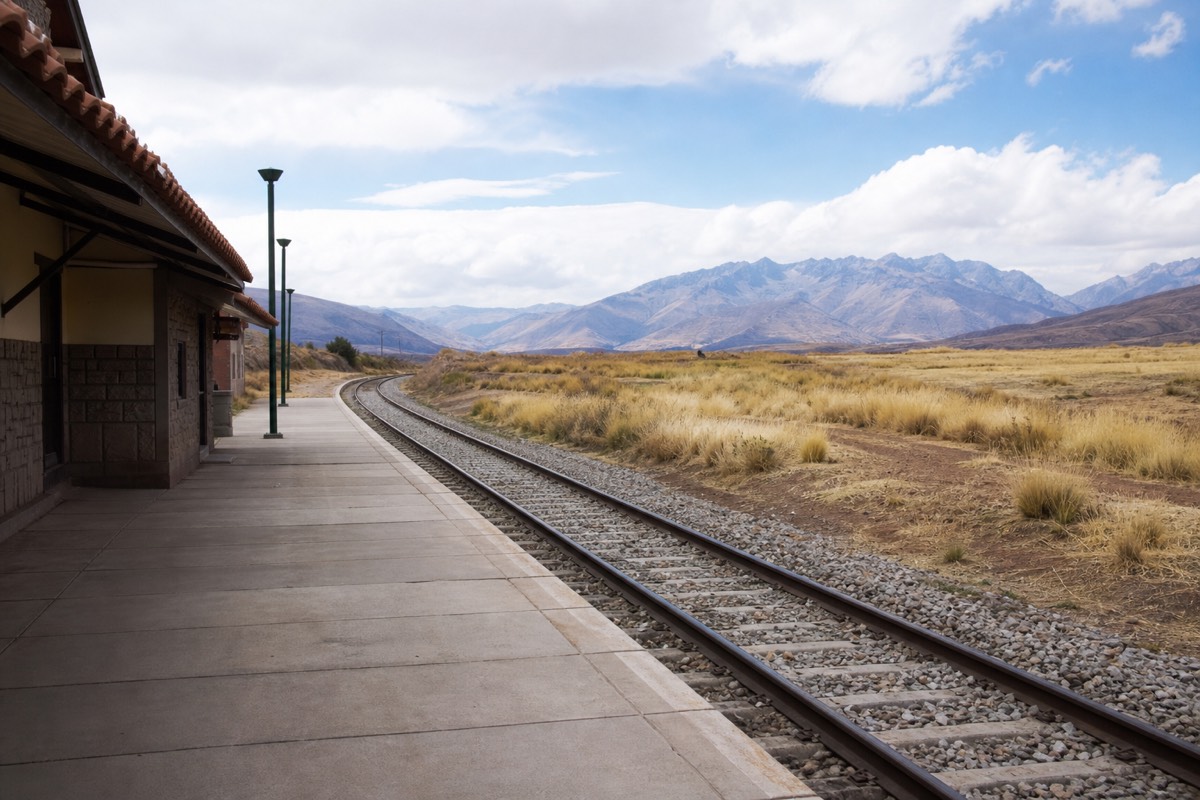
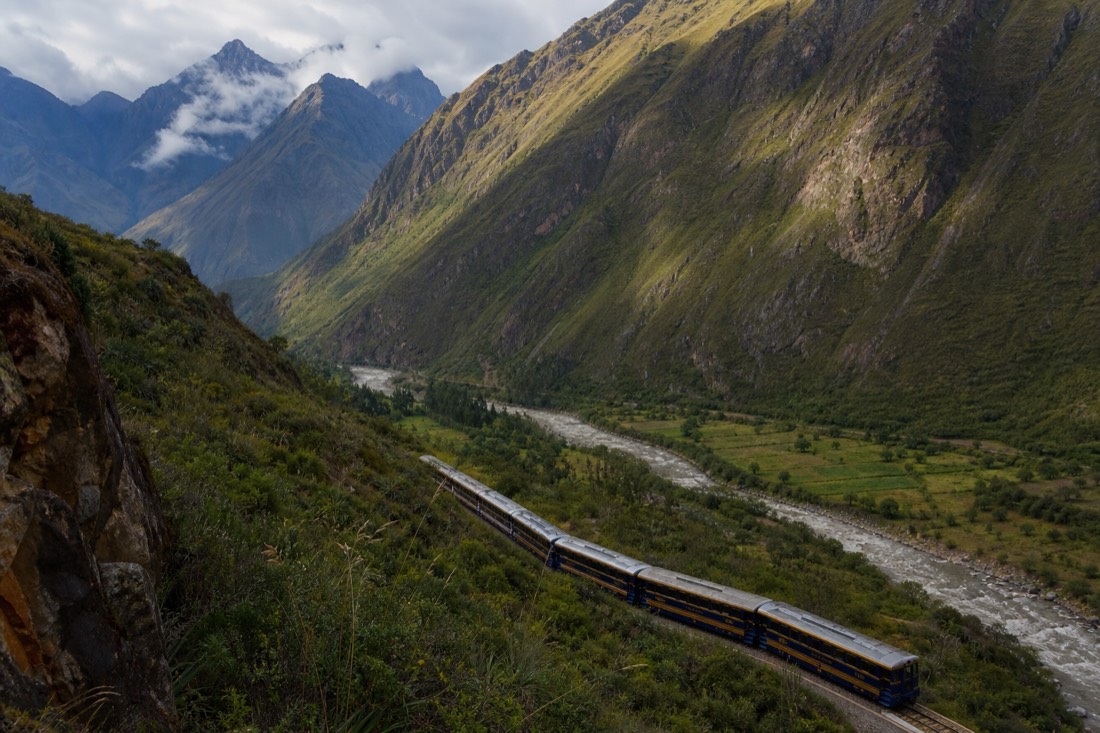
The Hiram Bingham normally departs from Poroy, a small station on the western edge of Cusco, roughly 20 to 30 minutes by road from the city centre. It is not the Sacred Valley station most day-trippers use. In some seasons PeruRail shifts the service to Ollantaytambo instead, deeper in the valley.
Poroy sits on the high ground just outside Cusco, close enough that the private coach transfer feels like a short hotel run rather than a valley expedition. That single detail changes a lot. It means most Hiram Bingham passengers can sleep in the city, eat breakfast at their hotel, and still make a mid-morning departure without a pre-dawn drive. When PeruRail restored direct departures from Poroy, it confirmed in its own news release on Hiram Bingham operations that the luxury service would run "departing directly from Cusco" from that station.
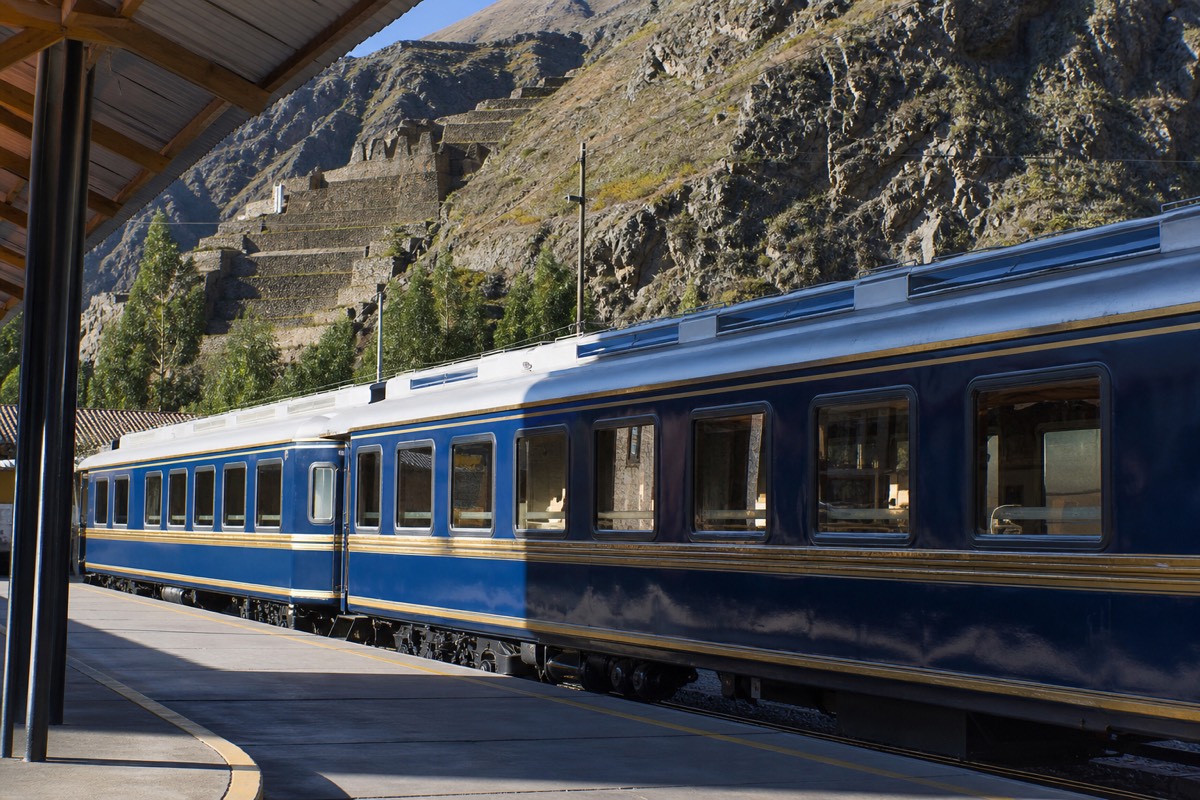
Ollantaytambo is the other name you will see. It is the workhorse station for the daytime services, about 90 minutes further down the valley, and PeruRail does sometimes run the Hiram Bingham from there instead. If you are weighing up your broader train options from Cusco to Machu Picchu, the station question sits underneath all of them, because where the train starts decides how far you travel by road first.
Poroy or Ollantaytambo: how do the two stations compare?
Poroy is close to Cusco but high, around 3,400 to 3,500 metres, and the rail run from there is long. Ollantaytambo sits far lower at 2,792 metres and much closer to Machu Picchu, so the road transfer is long but the train ride is short. Each trades road time for rail time in the opposite direction.
Rule of thumb: leaving from Poroy means a short drive and a long, scenic train. Leaving from Ollantaytambo means a long drive through the Sacred Valley and a shorter train.
Neither station is objectively better. They suit different trips. A traveller based in central Cusco with limited time leans toward Poroy. A traveller already staying in Urubamba or Ollantaytambo, or one using the lower valley to acclimatise, is far better served boarding in the valley. The table below lays the two side by side so you can see the trade at a glance.
| Feature | Poroy (Cusco) | Ollantaytambo (Sacred Valley) |
|---|---|---|
| Elevation | About 3,400 to 3,500 m | 2,792 m |
| Road time from central Cusco | 20 to 30 minutes | About 1.5 to 2 hours |
| Rail time to Aguas Calientes | About 3.5 hours | About 1.5 to 2 hours |
| Best for | Guests based in Cusco city | Guests based in the valley |
| Character | Quiet edge-of-city halt | Busy valley hub beside Inca ruins |
| Hiram Bingham uses it | Most of the year, direct from Cusco | Seasonally, as an alternate boarding point |
How long is the transfer to each station, and who arranges it?
With the Hiram Bingham bundle you do not arrange the transfer at all: a private coach collects you from your Cusco hotel and delivers you to the departure station. From central Cusco to Poroy is a 20 to 30 minute drive; to Ollantaytambo it is closer to 1.5 to 2 hours through the valley.
The transfer time only becomes your problem if you book the bare train ticket separately and organise your own way to the platform. That is where people come unstuck, especially with an Ollantaytambo departure, because a valley station two hours from your hotel demands an early, reliable driver. Booking the packaged experience removes that variable. Our team at Hiram Bingham Train Tickets books the bundle that folds those station transfers in, so the coach timing is matched to the departure rather than left to a taxi app.
| Starting point | To Poroy | To Ollantaytambo |
|---|---|---|
| Central Cusco hotel | 20 to 30 min | 1.5 to 2 hr |
| Sacred Valley (Urubamba) | About 1.5 hr back toward Cusco | 25 to 35 min |
| Pisac area | About 1 hr toward Cusco | About 1 hr down-valley |
| Ollantaytambo town | Not practical | 5 to 10 min on foot or by car |
Read that table as a warning as much as a reference. If you are sleeping in the valley and your train unexpectedly leaves from Poroy, you are looking at a long backtrack toward Cusco on the morning of your trip. The station is not a formality. It anchors the whole day.
Why does the departure station change with the season?
PeruRail sometimes adjusts the Poroy stretch, usually during the height of the rainy season from roughly January to March, when track work, weather and maintenance on the higher section make direct Cusco departures harder to run reliably. In those windows the Hiram Bingham and the daytime trains are more likely to board in the Sacred Valley instead.
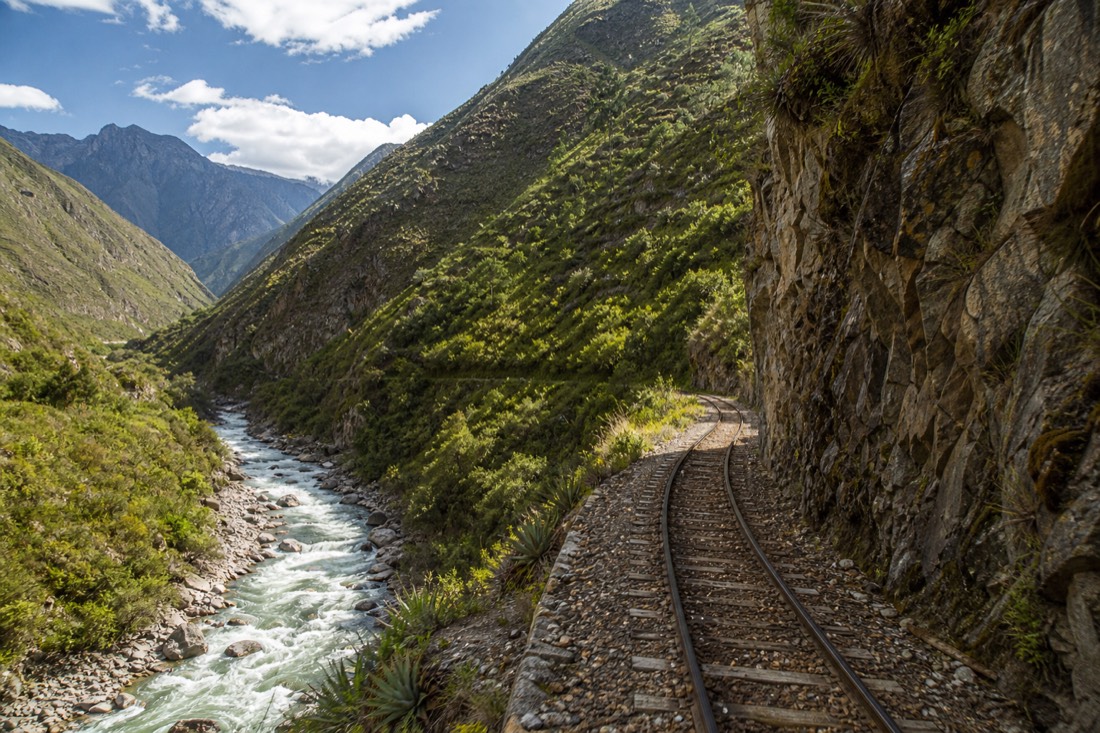
This is not a quirk of one operator being difficult. The line between Cusco and the valley climbs and descends steep, geologically active ground, and the wettest months bring landslide and flood risk that closes or slows the upper stretch. PeruRail has previously suspended and later reinstated Poroy departures for exactly these reasons, which is why its own bulletins keep pointing travellers to the current schedule rather than a fixed one. When the higher section is out, the daytime services often switch to a bimodal arrangement, a bus from Cusco to Ollantaytambo followed by the train, while the Hiram Bingham simply boards lower down the valley.
The practical takeaway is to confirm your station close to travel, not months out. Choosing the best time to visit Machu Picchu is partly a question of dry season versus the wet season for the ruins themselves, and partly this quieter logistics question of whether your train will even start where you expect. The two overlap. The drier months that give clearer views over the citadel are also the months least likely to move your departure.
Does the departure station change your journey time?
Yes, and by a wide margin on the rails. From Poroy the ride to Aguas Calientes runs about 3.5 hours each way, the full scenic descent. From Ollantaytambo it is roughly 1.5 to 2 hours, because you have already covered the high ground by road. Total door-to-door time can end up similar; the split between road and rail is what shifts.
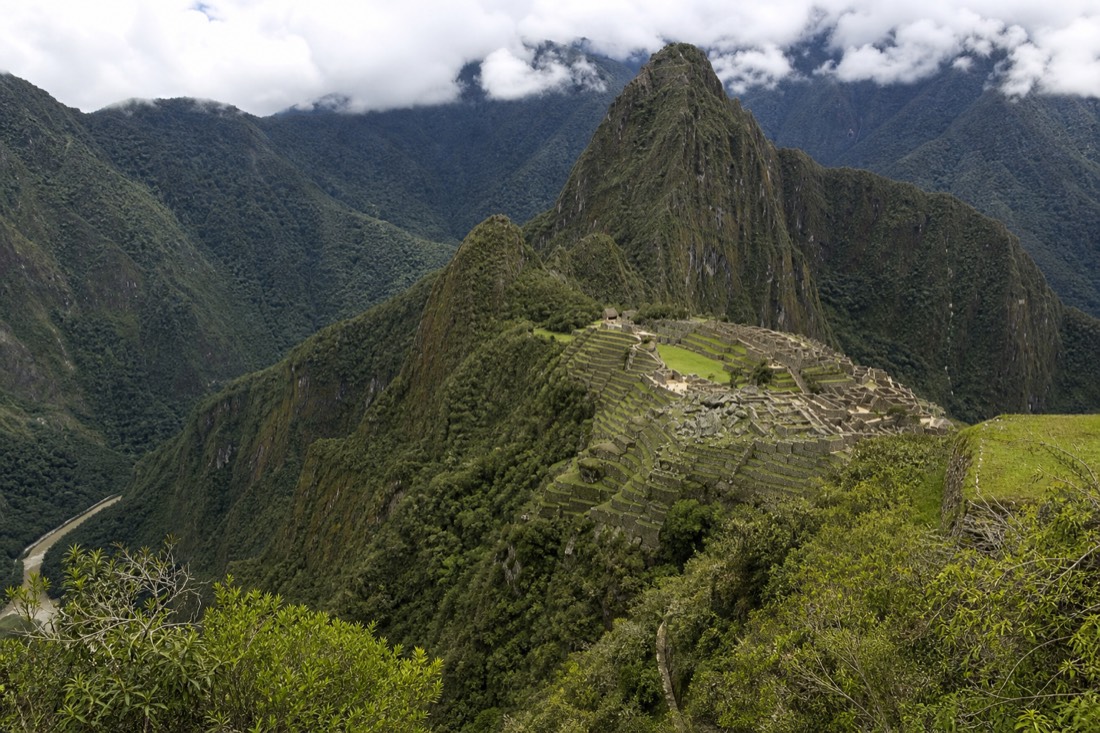
For a slow luxury train, more rail time is a feature, not a cost. The Hiram Bingham is built around its onboard hours: brunch and an open bar on the way in, a four-course dinner and live music on the way back. A Poroy departure gives you more of that. An Ollantaytambo departure trims the ride but spares you nothing you would miss, since the service compresses the same experience into a shorter run. If you are trying to fit a day trip to Machu Picchu from Cusco into a tight itinerary, the shorter valley boarding can help, though the Hiram Bingham is designed to be savoured rather than rushed.
| Leg | From Poroy | From Ollantaytambo |
|---|---|---|
| Road transfer (each way) | 20 to 30 min | 1.5 to 2 hr |
| Rail, outbound | About 3.5 hr | About 1.5 to 2 hr |
| Rail, return | About 3.5 hr | About 1.5 to 2 hr |
| Rail, round trip | About 7 hr | About 3 to 4 hr |
| Where the scenery peaks | Long high-to-low descent | Lower valley and river gorge |
How does the station choice affect altitude and acclimatisation?
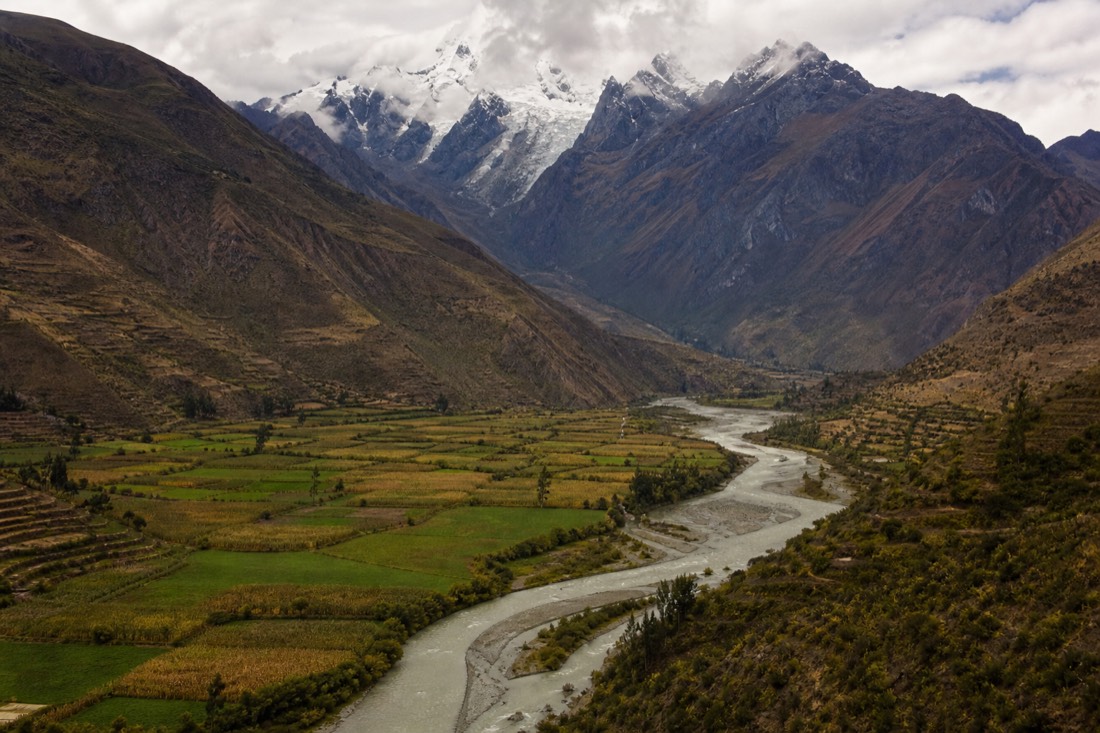
The station sits at the centre of any altitude plan. Cusco and Poroy are high, around 3,400 metres and up. Ollantaytambo is 2,792 metres, and the wider Sacred Valley runs 500 to 600 metres below the city. Basing yourself in the valley, and boarding there, gives your body a gentler starting altitude before and after the train.
This matters because altitude sickness in Cusco is one of the most common ways a Machu Picchu trip goes sideways in the first 48 hours. The standard medical advice is to ascend gradually and sleep lower, and the geography of the Sacred Valley obliges: towns like Urubamba and Ollantaytambo let you acclimatise at a more forgiving height than Cusco itself. Many travellers deliberately spend their first nights down there for that reason, then climb back to Cusco once their bodies have adjusted. PeruRail even discusses soroche, the local name for altitude sickness, in its own traveller guidance. That same logic starts even earlier for travellers coming from Lima or the coast: reaching Cusco overland on a hop-on hop-off network like Peru Hop (check prices here), rather than flying in directly, spreads the climb over several days of travel through Arequipa and Puno before you ever reach either station.
So the station is not only a logistics decision. If you know altitude hits you hard, a valley base with an Ollantaytambo boarding keeps your highest sleeping altitude lower for longer. If you acclimatise easily and want the maximum train experience, Cusco and Poroy make sense. The elevation ladder below shows where each point sits.
| Place | Elevation | Role on this trip |
|---|---|---|
| Poroy / Cusco | About 3,400 to 3,500 m | High base and main departure |
| Urubamba | 2,870 m | Gentle valley acclimatisation base |
| Ollantaytambo | 2,792 m | Lowest valley base and alternate station |
| Machu Picchu citadel | About 2,430 m | The destination |
| Aguas Calientes | 2,040 m | Rail terminus below the ruins |
What does the Hiram Bingham bundle handle for you at the station?
The station is where the bundle earns its keep. Private coach transfers between your Cusco hotel and the departure platform are included, along with the welcome reception, luggage handling and check-in. You are not chasing a taxi, decoding a schedule, or carrying bags across a platform. You arrive, hand over your case, and are received with a drink.
That end-to-end handling is a real part of the value, and it is worth separating from the bare rail fare. The full experience folds the Machu Picchu entrance ticket, a guided visit of the citadel and the bus up the switchback road into one price, which is why the packaged cost of the Hiram Bingham ticket sits so far above a train-only fare. If you want the fare breakdown against the daytime services, the difference is largely everything the bundle absorbs on your behalf. As context, the Machu Picchu entrance alone runs around 152 soles for a foreign adult in 2026, roughly 40 US dollars before any conservation fee, and buying that plus a guide plus transfers separately eats the apparent saving of a bare ticket. Always check the official ticket site for the current figure.
| At or around the station | Handled by the bundle? |
|---|---|
| Hotel-to-station private coach | Yes, both directions |
| Welcome reception and boarding | Yes |
| Luggage handling | Yes |
| Onboard brunch, dinner, open bar, music | Yes |
| Bus up from Aguas Calientes to the citadel | Yes |
| Machu Picchu entrance and guided visit | Yes |
| Arranging your own driver to a valley station | No, not needed |
Where should you base yourself before the train?
Base in Cusco if you are short on nights, want the city's food and ruins, and cope well with altitude, because Poroy is on your doorstep. Base in the Sacred Valley, at Urubamba or Ollantaytambo, if you have an extra night, want to acclimatise low, or expect a valley departure. Both work; the right one depends on your time and your body.
There is no single correct answer, so treat it as a grid rather than a verdict. The decision usually comes down to three inputs: how many nights you have, how altitude affects you, and whether you would rather spend the morning of your train on a short hop or a long valley drive. Weigh the citadel circuits and your Machu Picchu entrance tickets into it too, since your booked entry time sets when you need to be moving. For most first-timers with a few days in the region, a night or two low in the valley followed by Cusco is both kinder on the body and more flexible if the station shifts.
| If you are... | Base here | Why |
|---|---|---|
| Short on time, altitude-tolerant | Central Cusco | Poroy is 20 to 30 min away; city sights on tap |
| Worried about altitude | Sacred Valley | Sleep 500 to 600 m lower before going higher |
| Already touring the valley | Ollantaytambo or Urubamba | Valley station and ruins on your doorstep |
| Travelling in the wet season | Sacred Valley | Better placed if departures shift down-valley |
| Chasing the longest train ride | Cusco / Poroy | Full 3.5-hour scenic descent each way |
Whichever base you choose, lock in the details close to travel and confirm your station on the live listing before you commit to a hotel two hours from the wrong platform. When you have compared the trains and settled on the luxury service, the station falls into place around the rest of your plan rather than dictating it. That final piece of context, incidentally, is also why PeruRail is so expensive: the same terrain that makes Poroy tricky in the rains makes the whole line costly to run.