Hiram Bingham vs Vistadome vs Expedition: PeruRail Compared
PeruRail runs three tourist trains from Cusco to Machu Picchu. Here is the honest, side-by-side breakdown of price, comfort, what's included and schedule, so you can pick the one that fits your trip.
Which PeruRail train should you take to Machu Picchu?
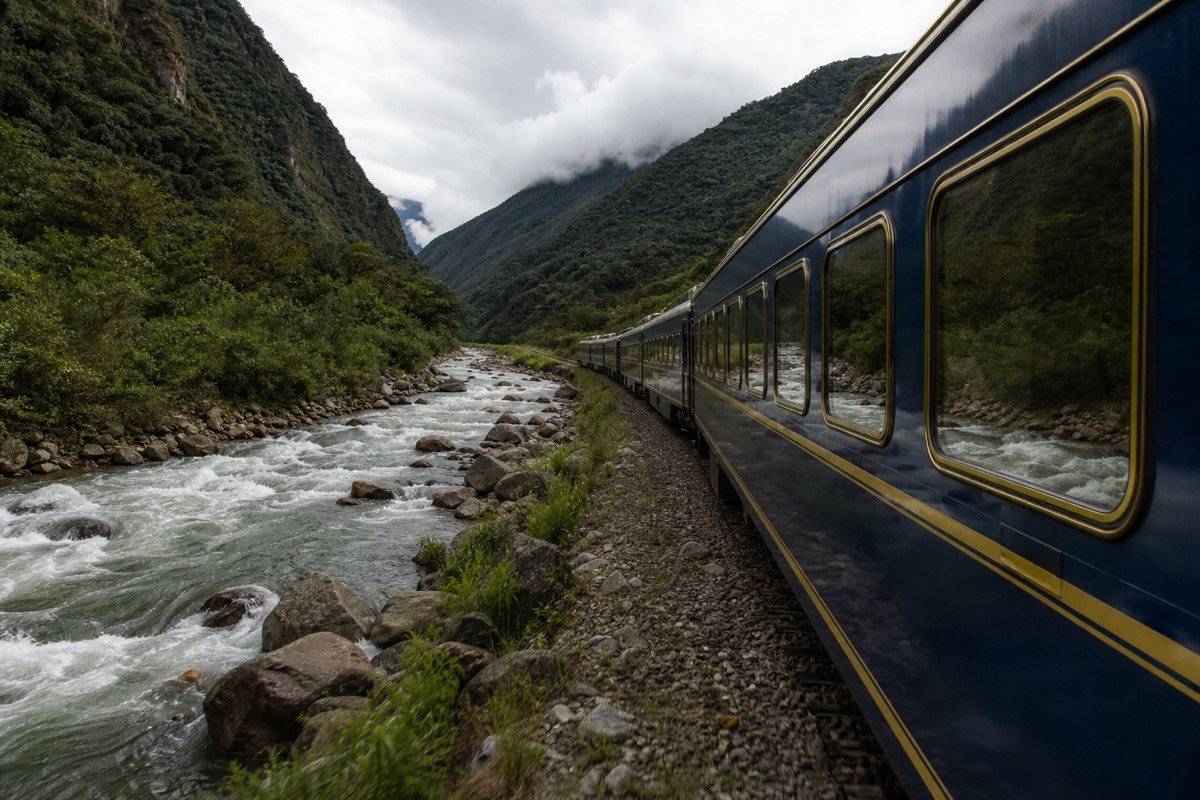
PeruRail runs three tourist services on the Cusco to Machu Picchu line: the budget Expedition, the panoramic Vistadome, and the luxury Belmond Hiram Bingham. Pick the Expedition to save money, the Vistadome for big windows at a fair price, and the Hiram Bingham for an all-inclusive day where brunch, an open bar, live music, your guide and your Machu Picchu ticket are already handled.
All three cover the same stretch of track and reach the same place, the little town of Aguas Calientes at the foot of the citadel, in roughly the same time. What changes is how the hours pass. The Expedition gets you there reliably and cheaply. The Vistadome trades a little more money for glass overhead and a show on board. The Hiram Bingham turns the ride itself into the event, which is why so many travellers weighing the train options from Cusco to Machu Picchu end up comparing these two decisions at once: which class, and whether the top tier earns its price.
Below is the short version, then the detailed breakdown behind every row. None of this is a sales pitch dressed as advice. The Expedition and the Vistadome are genuinely good trains for what they charge, and most first-time visitors ride one of them happily. The Hiram Bingham is a different kind of purchase, and the rest of this page is about deciding whether that purchase is right for your trip.
| Feature | Expedition | Vistadome | Hiram Bingham |
|---|---|---|---|
| Tier | Budget tourist class | Panoramic tourist class | Luxury, Belmond-operated |
| Windows | Standard side windows | Large side windows + glass roof panels | Large windows, wood-panelled 1920s-style cars |
| Meals | Snacks and drinks for purchase | Light snack or boxed meal included | Full brunch out, full meal service back |
| Open bar | No | No | Yes, included |
| On-board show | None | Andean music, dance, alpaca fashion show | Live music in the bar car, dancing |
| Guided Machu Picchu visit | Not included | Not included | Included, roughly 2 to 2.5 hours |
| Machu Picchu entrance ticket | Buy separately | Buy separately | Included in the bundle |
| Transfers | Arrange your own | Arrange your own | Coach and bus transfers included |
| Passengers per departure | Large, many cars | Large, many cars | Up to 84, small and exclusive |
| Best for | Backpackers, tight budgets | Views without the luxury price | Special occasions, all-inclusive comfort |
One thing to settle before you read on: the price gap between the daytime trains and the Hiram Bingham is not a small upgrade fee. It is a jump into a fully different product. Keep that framing, because it explains almost every difference below.
What does each service cost, and what does the fare actually cover?
Expedition fares are the cheapest, commonly in the region of $60 to $100 one way. The Vistadome usually runs higher, roughly $90 to $160 one way. The Hiram Bingham sits far above both: bare one-way fares circulate around $500 to $660, and the all-in day bundle that adds your Machu Picchu ticket, guide and transfers lands near $1,580. Always check the live listing or the official site for today's exact figure.
Train pricing on this line is not fixed. It moves with the departure time, the day of the week and the season, and PeruRail prices in US dollars for foreign visitors. Early-morning and late-afternoon slots on the Expedition and Vistadome cost less than the convenient mid-morning departures, so two people on the same train can pay different amounts depending on when they booked and which slot they chose. Treat every number here as a band to sanity-check against, not a quote.
The Hiram Bingham's headline price is high for one clear reason: it is not really a train fare. It is a catered day out. Strip the brunch, the open bar, the entertainment, the guide, the entrance ticket and the door-to-door transfers back out, and you are comparing a very different number. That is the heart of the fare breakdown, and it is why the cost of the Hiram Bingham ticket confuses people who compare it line-for-line against an Expedition seat.
| Service | Typical one-way fare | Round-trip, train only | What the fare covers |
|---|---|---|---|
| Expedition | ~$60 to $100 | ~$120 to $200 | Seat, on-board snacks and drinks sold separately |
| Vistadome | ~$90 to $160 | ~$180 to $320 | Seat, panoramic car, snack, on-board show |
| Vistadome Observatory | ~$100 to $170 | ~$200 to $340 | Vistadome plus an open-air observatory bar car |
| Hiram Bingham (train only) | ~$500 to $660 | ~$1,000 to $1,200+ | Meals, open bar, music, service; ticket and guide extra |
| Hiram Bingham (full day bundle) | — | ~$1,580 | Train, meals, bar, guide, Machu Picchu entrance, transfers |
Do not forget the entrance ticket if you ride a daytime train. A foreign-adult ticket for a standard circuit sits around 152 Peruvian soles, roughly $40, with mountain add-ons for Huayna Picchu or Machu Picchu Mountain closer to 200 soles, about $53, and a small conservation fee layered on in 2026. Those figures shift, so confirm the current price on the official platform when you book your Machu Picchu entrance tickets. The Hiram Bingham bundle rolls that ticket in for you, which is part of why the two prices are not comparing like with like. For a fuller line-by-line look, see the dedicated fare breakdown, and for the wider question of why PeruRail is so expensive, there is a separate answer worth reading before you decide.
What is included on board each train?
The Expedition includes your seat and little else, with food and drinks sold on board. The Vistadome adds a snack, an Andean music and dance set, and a baby-alpaca fashion show on return trips. The Hiram Bingham includes everything: brunch, a full return meal, an open bar, live entertainment, your guide, your entrance ticket and all transfers.
This grid is the honest core of the comparison. Reading down the Hiram Bingham column shows why the price is what it is, and reading down the Expedition column shows how little you actually give up if your priority is simply reaching the citadel with money left over for the rest of Peru.
| Included item | Expedition | Vistadome | Hiram Bingham |
|---|---|---|---|
| Reserved seat | Yes | Yes | Yes |
| Snacks and drinks | For purchase | Light snack included | Included, generous |
| Full meal service | No | No | Brunch out, full meal back |
| Open bar | No | No | Yes |
| Live music and dance | No | Yes | Yes |
| Alpaca fashion show | No | Yes, on return | Style is different, dancing not a runway |
| Panoramic roof glass | No | Yes | Large windows, no full glass roof |
| Machu Picchu entrance ticket | No | No | Yes |
| Guided citadel tour | No | No | Yes, around 2 to 2.5 hours |
| Bus Aguas Calientes to gate | No | No | Yes, both ways |
| Coach transfers Cusco to station | No | No | Yes, both ways |
Notice the two rows that quietly matter most for a smooth day: the entrance ticket and the transfers. On a daytime train you book the ticket yourself, pick your circuit, and sort your own ride to and from Poroy or Ollantaytambo and the bus up from Aguas Calientes. That is not hard, and plenty of independent travellers prefer the control. But if you want none of it on your plate, the Hiram Bingham removes every one of those steps, and that convenience is a real part of what you are paying for.
How different are the carriages, windows and comfort?
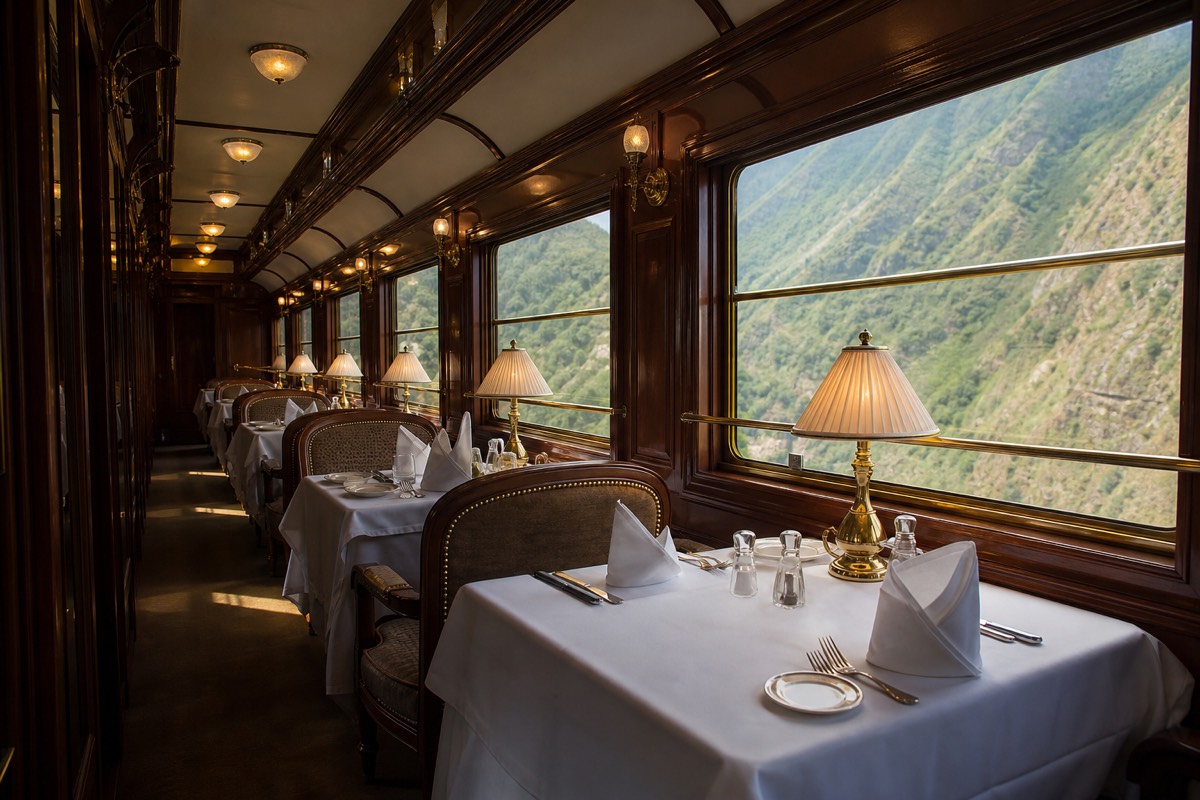
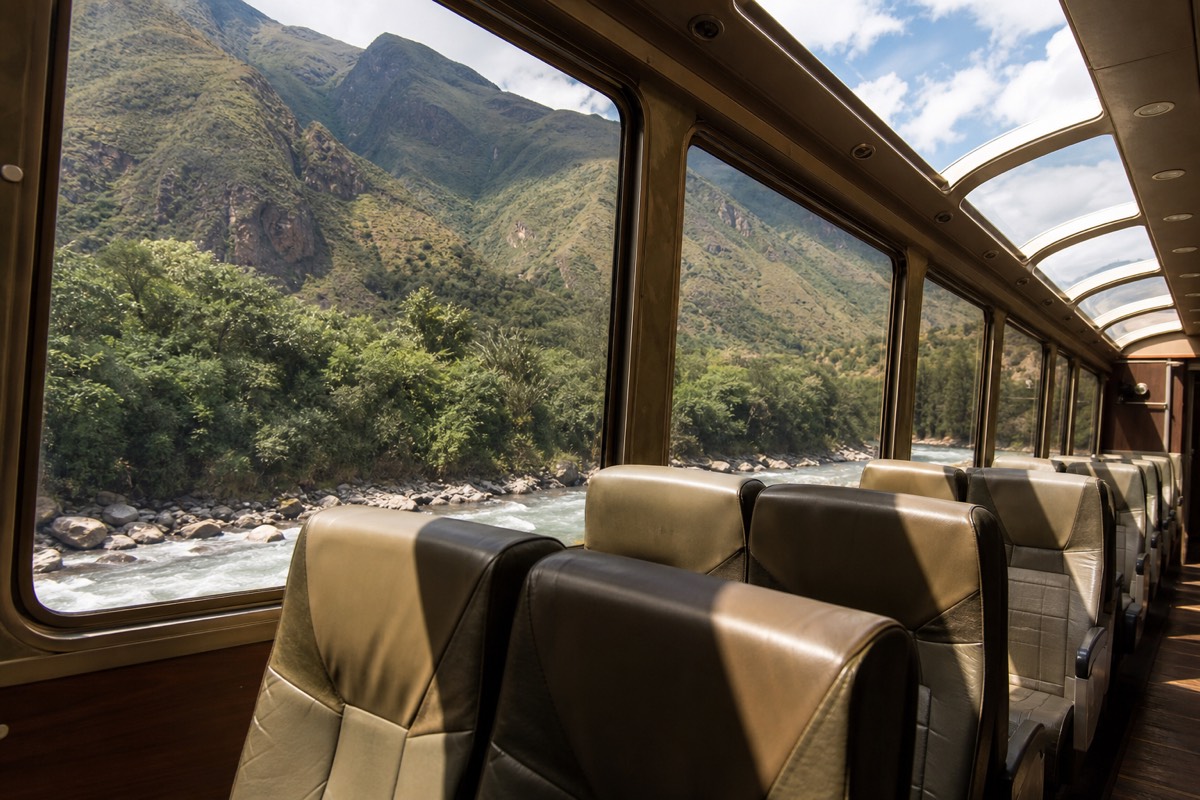
The Expedition has comfortable standard seats and ordinary windows. The Vistadome adds larger side windows and glass roof panels that open the view upward toward the peaks. The Hiram Bingham is a restored 1920s-style train with wood panelling, brass, dining cars, a bar car and an open-deck observation car, carrying only about 84 guests.
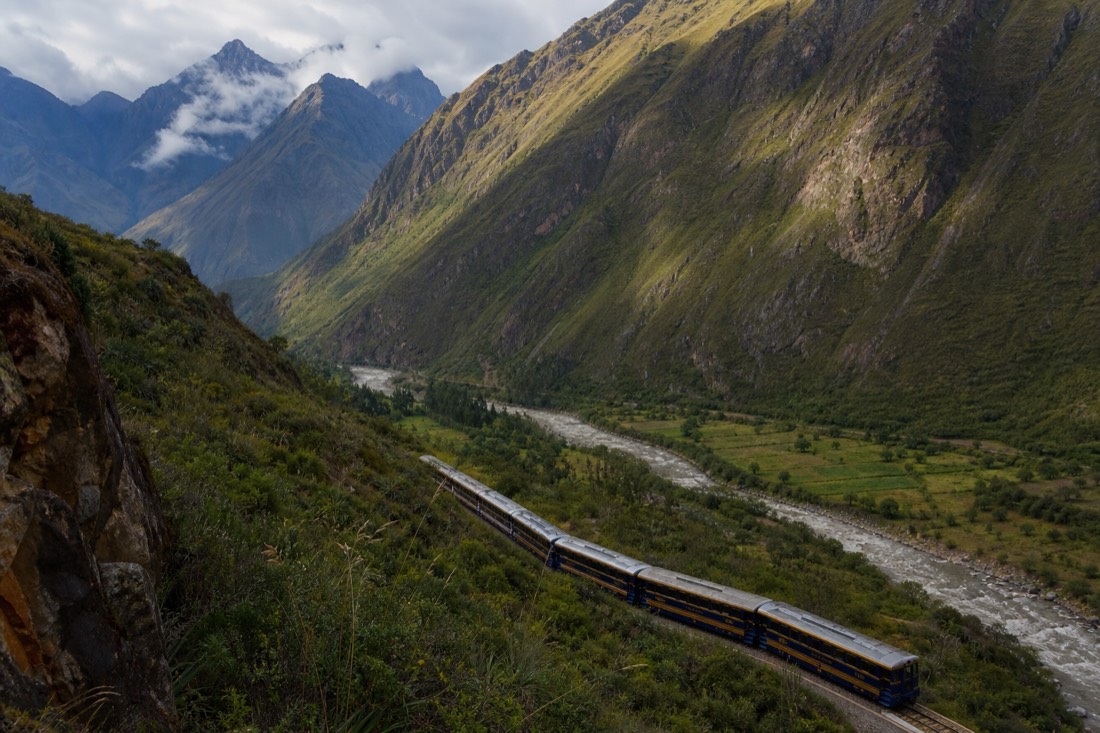
If your reason for upgrading is the view, know exactly what each window setup does. The Vistadome's glass ceiling is the standout: on the stretch where the line runs beneath high canyon walls, being able to look almost straight up changes the ride, and that overhead glass is the single feature that makes people ask whether the panoramic train is worth it. The Hiram Bingham does not have a full glass roof. What it has instead is space, an open-air deck at the back of the observation car, and the freedom to leave your seat, stand at the rail with a drink and watch the Sacred Valley roll by. Two different philosophies of the same view.
According to PeruRail's own description of the Vistadome Observatory, the top panoramic carriage pairs a transparent roof with an open-air balcony section behind safety railings, which is the closest the daytime fleet comes to the Hiram Bingham's open deck. Belmond, for its part, leans on heritage: the operator's Hiram Bingham page describes gleaming wood-panelled interiors and brass finishes across two dining cars, a bar car and an observation car with an open platform.
| Comfort aspect | Expedition | Vistadome | Hiram Bingham |
|---|---|---|---|
| Window style | Standard side | Oversized side windows | Large windows, period styling |
| Roof | Solid | Glass panels overhead | Solid, wood-panelled interior |
| Seating | Fixed rows, no tables | Comfortable, some table seats | Armchair-style with set tables |
| Open-air deck | No | On the Observatory car | Yes, on the observation car |
| Bar / lounge car | No | Observatory version only | Yes, a dedicated bar car |
| Crowding | Full, busy cars | Full, busy cars | Small, up to 84 guests |
| Overall feel | Practical commuter-plus | Scenic and lively | Refined, unhurried, celebratory |
What is the schedule, and how often does each run?
The Expedition and Vistadome run several departures a day, seven days a week, so they are easy to fit around any plan. The Hiram Bingham is the opposite: it runs only 3 to 4 days a week, typically Monday, Wednesday, Friday and Saturday, with a single departure each way. That scarcity is why it sells out weeks or months ahead in peak season.
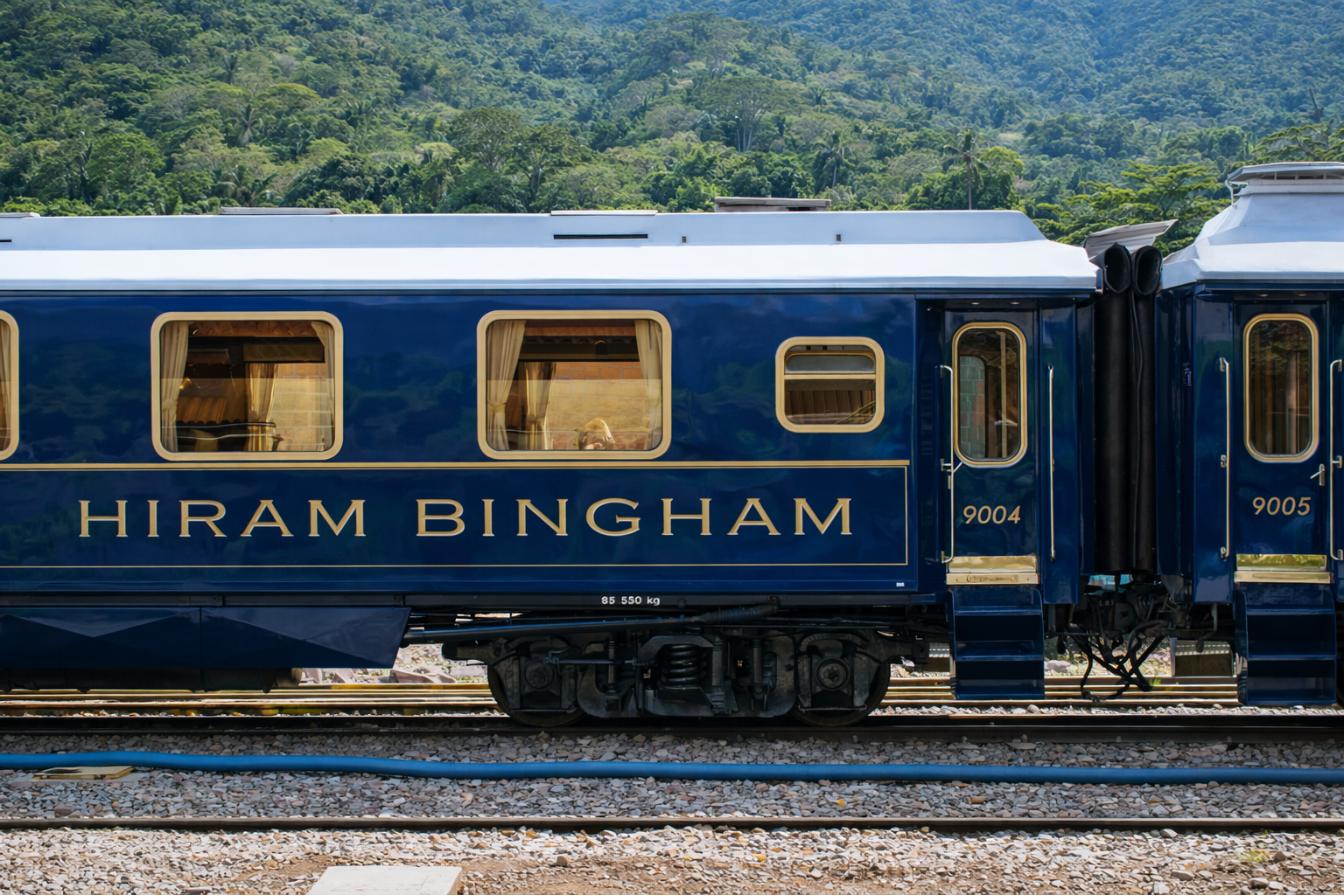
Frequency is a bigger deal than most people expect. Because the daytime trains leave often, you can build a flexible itinerary, decide late, or shift a day if the weather looks poor. The Hiram Bingham forces the reverse: you pick your Machu Picchu day around the train's limited calendar, not the other way round. If your travel dates are fixed and narrow, check the Hiram Bingham's running days first, before you lock anything else, because a missing Tuesday or Thursday can quietly decide your whole plan.
| Service | Days it runs | Departures per day, each way | How far ahead it books out |
|---|---|---|---|
| Expedition | Daily | Several | Days to weeks in peak season |
| Vistadome | Daily | Several | Weeks in peak season |
| Vistadome Observatory | Most days | One to a few | Weeks in peak season |
| Hiram Bingham | 3 to 4 days a week (often Mon, Wed, Fri, Sat) | One | Weeks to months, June to August |
Peak demand runs June through August, the heart of the dry season, and holidays spike it further. If you are set on the luxury train for a specific date, book early. The daytime trains give you far more room to be spontaneous, which itself is a reason some travellers plan a day trip to Machu Picchu from Cusco on the Vistadome rather than tying the trip to a once-a-day luxury slot.
What does each journey actually feel like?
The Expedition feels like efficient, friendly transport with good scenery through the window. The Vistadome feels like a scenic excursion with a soundtrack: music, a dance set and a fashion show fill the return. The Hiram Bingham feels like a moving restaurant and lounge, where the ride is the point and Machu Picchu is one stop on a full day of hospitality.
On the Expedition, people read, chat and watch the Urubamba River unspool beside the track. Staff move through with a trolley. It is calm and unpretentious, and for a lot of travellers that is exactly enough. Nobody arrives at Machu Picchu feeling short-changed by an Expedition seat.
The Vistadome raises the energy. The glass roof pulls your eyes upward, and on the way back the crew turns the car into a small show, with Andean musicians, the Saqra masked dance, and models walking the aisle in baby-alpaca knitwear you can buy on board. It is touristy in the best sense, warm and a little theatrical, and children tend to love it.
The Hiram Bingham is quieter and grander. You board to a welcome drink, settle at a laid table, and brunch is served as the train climbs out of the Cusco area. On the return there is a full meal, the bar stays open, and live music drifts through from the bar car where people gather to dance. The dress code is smart casual, which sets the tone; Belmond's FAQ spells that out along with the US-dollar pricing. Whether you find that magical or excessive is genuinely personal, and it is the real question behind Hiram Bingham vs the Vistadome.
Who is each train right for?
Choose the Expedition if budget leads and you just want to reach Machu Picchu reliably. Choose the Vistadome if you want the best daytime views and onboard atmosphere at a fair price. Choose the Hiram Bingham if you want a special-occasion, all-inclusive day where every detail is handled and the train is part of the memory, not just the transport.
There is no single right answer, only a right answer for your trip. The table below matches common traveller types to a pick, with the honest reason behind each. Read it as a starting point, then weigh it against your dates, your budget and how much the journey itself matters to you versus the time on site.
| Traveller | Best pick | Why |
|---|---|---|
| Backpacker on a tight budget | Expedition | Lowest fare, gets you there, saves cash for the rest of Peru |
| Value-seeker who still wants views | Vistadome | Glass roof and show for a fraction of the luxury price |
| Keen photographer | Vistadome Observatory | Panoramic roof plus an open-air deck for clean shots |
| Family with young children | Vistadome | The music, dance and fashion show keep kids engaged |
| Honeymoon or milestone trip | Hiram Bingham | Brunch, open bar, service and a guided visit, all handled |
| Traveller who hates logistics | Hiram Bingham | Ticket, guide and transfers included, nothing to arrange |
| One tight day, no room for error | Hiram Bingham | Door-to-door timing managed by the operator |
| Independent, flexible planner | Expedition or Vistadome | Frequent departures, change days easily, book your own circuit |
If you fall between rows, use this tie-breaker. Ask whether you would rather spend the extra money on the train or on more of Peru. If the answer is the train, and the date works, the Hiram Bingham rarely disappoints the people who choose it for the right reasons. If the answer is more of Peru, the Vistadome gives you most of the wonder for a small share of the outlay. Booking the top tier is exactly what we help with at Hiram Bingham Train Tickets, so the comparison here is meant to send you to the train that actually fits, not to talk everyone into the priciest seat.
Which stations do they use, and how long is each leg?
All three trains reach Aguas Calientes in roughly 3.5 hours from the Poroy area, or about 1.5 to 2 hours if you board deeper in the Sacred Valley at Ollantaytambo. The Hiram Bingham favours Poroy near Cusco for the full experience, while many Expedition and Vistadome departures start from Ollantaytambo. Confirm your exact station when you book, since it can shift with the season and track work.
Station choice affects your day more than the train class does in some ways. Boarding at Ollantaytambo means a road transfer of around 1.5 to 2 hours out from Cusco first, then a shorter, lower rail leg. Boarding at Poroy keeps you on the train longer and closer to the city. The Hiram Bingham's route from Poroy is part of why the ride feels like a full journey rather than a quick hop. Understanding the Poroy and Ollantaytambo stations helps you plan pickup times and avoid a rushed morning.
| Station | Location | Rough time from Cusco by road | Rail leg to Aguas Calientes |
|---|---|---|---|
| Poroy | Edge of Cusco | ~20 to 30 minutes | ~3.5 hours |
| Ollantaytambo | Deeper in the Sacred Valley | ~1.5 to 2 hours | ~1.5 to 2 hours |
| Aguas Calientes | Base of Machu Picchu | — | Arrival point, then bus up to the gate |
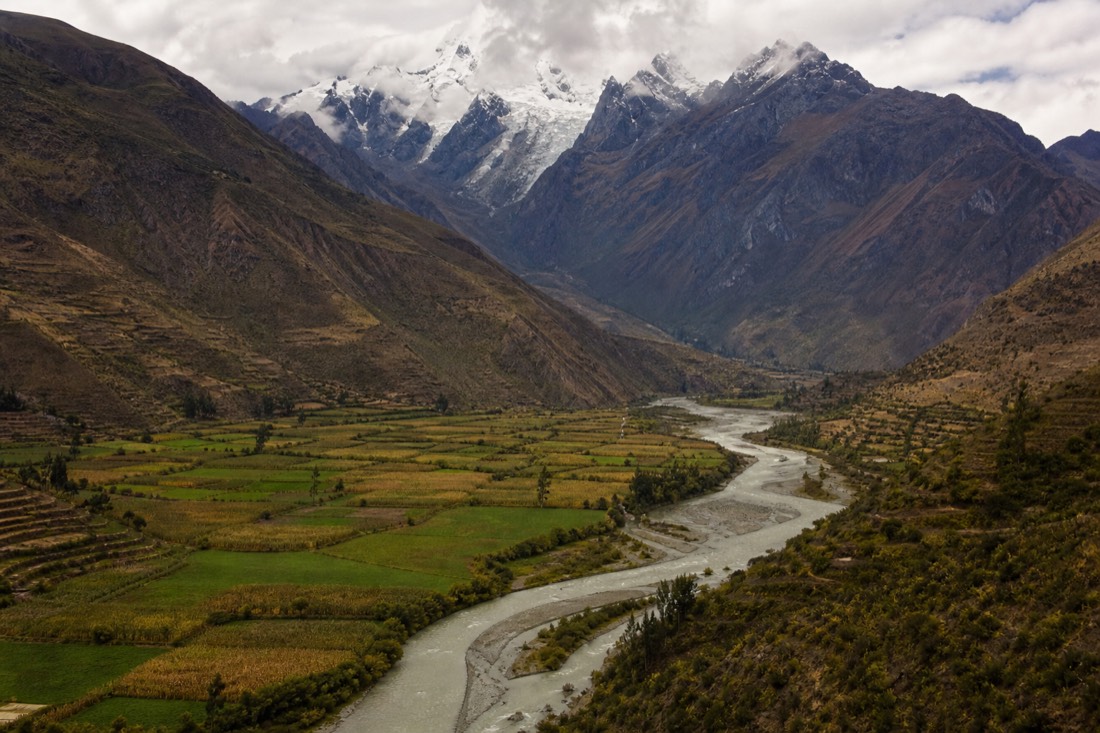
One more altitude note that cuts across all three trains: Cusco sits at about 3,399 metres and Aguas Calientes at only around 2,040 metres, so the journey actually drops you to a gentler elevation. Even so, your first day or two in Cusco can hit hard, and managing altitude sickness in Cusco before you travel matters far more than which carriage you pick. Give yourself time to acclimatise, and pair this comparison with a look at the best time to visit Machu Picchu so your chosen train lines up with clear skies rather than the heart of the wet season.