Is the Panoramic Train to Machu Picchu Worth It?
The panoramic Vistadome sits between the budget Expedition and the luxury Hiram Bingham. Here is when its glass roof and onboard show are worth the step up, and when they are not.
Is the panoramic train to Machu Picchu worth it?
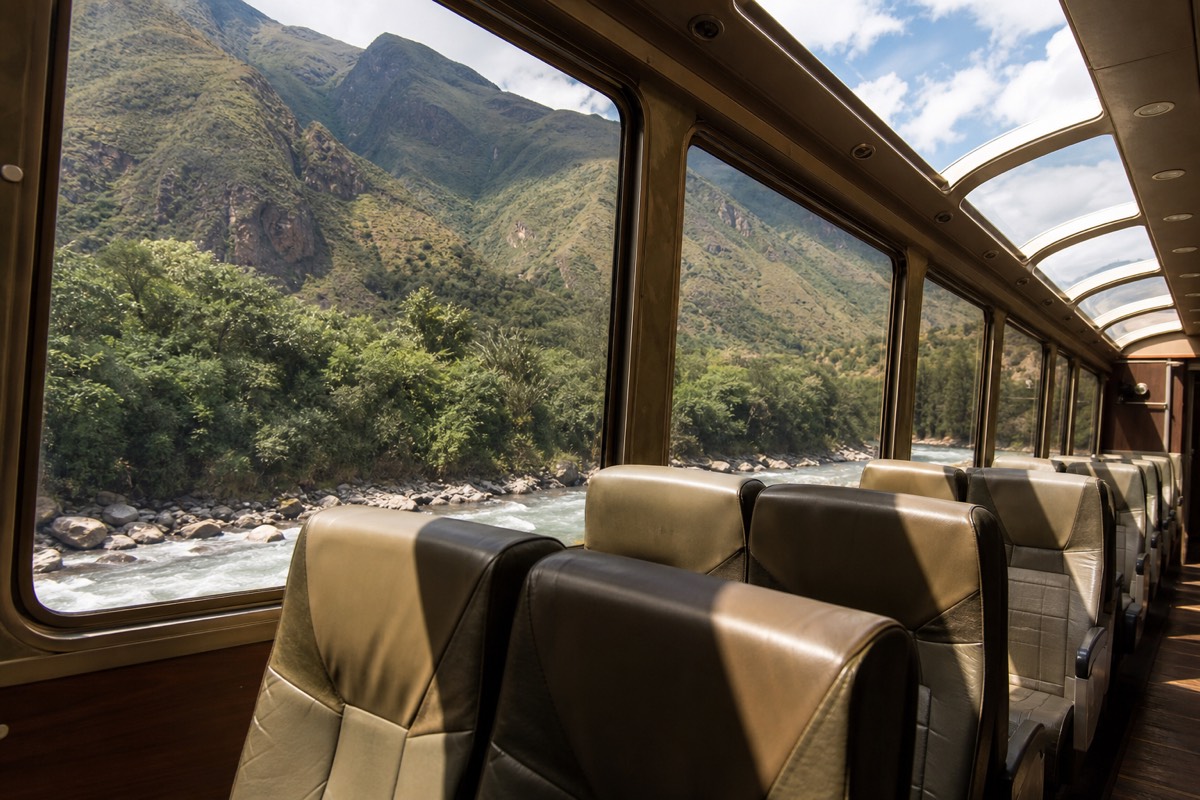
For most daytime travellers, yes. Stepping up from the basic Expedition to PeruRail's panoramic Vistadome buys a glass roof, oversized windows and a genuinely fun onboard show for a modest extra fare, and on this canyon route the overhead glass changes the ride. It is worth it when views and atmosphere matter to you, and easy to skip when you only want to reach the citadel cheaply.
The panoramic train here is PeruRail's Vistadome, the daytime service that sits between the budget Expedition and the luxury Belmond Hiram Bingham. People ask whether it is worth it because the fare is clearly higher than the Expedition, yet nowhere near the Hiram Bingham's price. The honest answer is that it lands in a real sweet spot, and whether that spot fits your trip comes down to four things: what the windows add, what the onboard show is like, how much you pay, and whether you are quietly tempted by full luxury instead.
This page works through each of those with the numbers and trade-offs laid out plainly. None of it pushes the priciest seat. The Vistadome is one of the best-value tourist trains you will ride anywhere, and saying so honestly helps more than talking anyone into an upgrade. Want the short version? Skip to the who-should-pick-what table near the end. Want the reasoning? Read on, because a few situations flip the answer completely.
What exactly is the panoramic train, and which version is it?
Panoramic almost always means PeruRail's Vistadome, and it comes in two forms. The standard Vistadome has oversized side windows and glass roof panels. The pricier Vistadome Observatory adds a fully transparent roof, a dedicated bar car and an open-air balcony behind safety railings. Both run in daylight on the scenic middle of the line, so the real choice is how far you want to push the view.
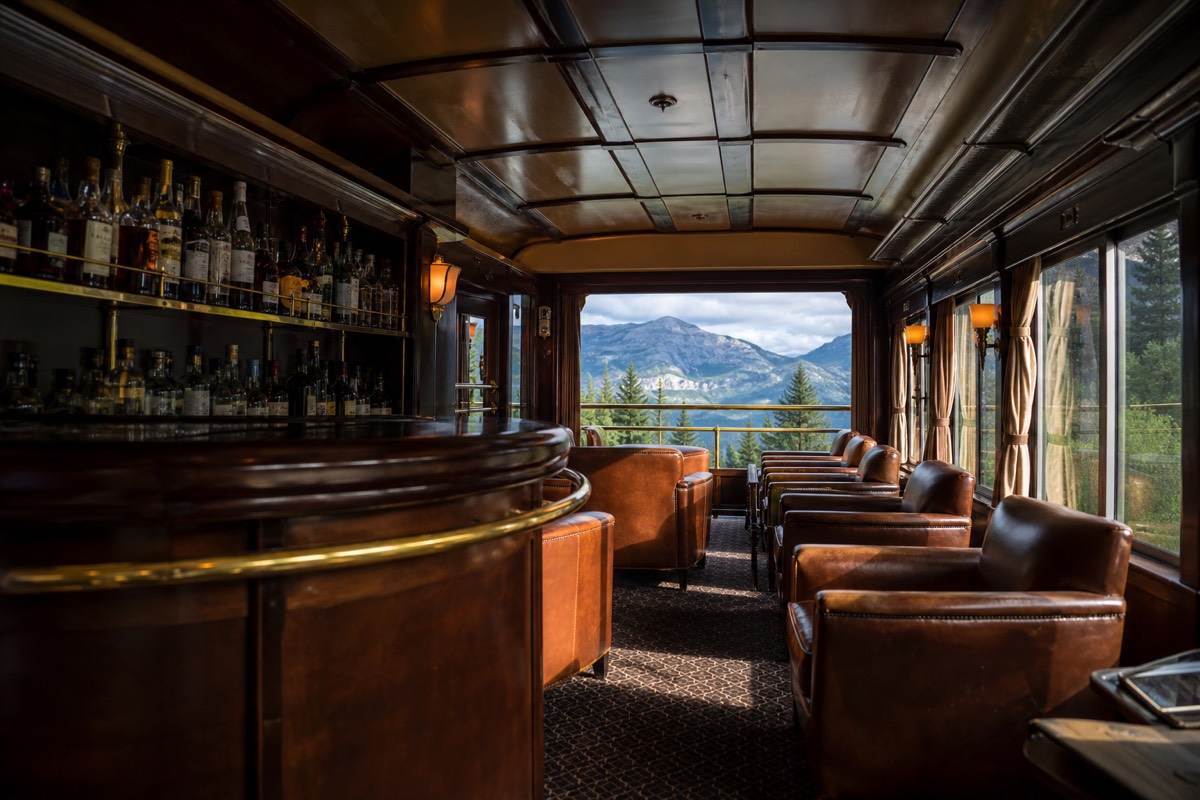
The distinction trips people up when they compare fares online, because two panoramic tickets can carry different prices and different cars. The standard version is the one most travellers mean and most agents sell. The Observatory is the view-maximised sibling: PeruRail describes its observation car as offering 360-degree panoramic views through expansive windows and a transparent roof, plus an open-air balcony where you can stand in the moving air behind secure railings.
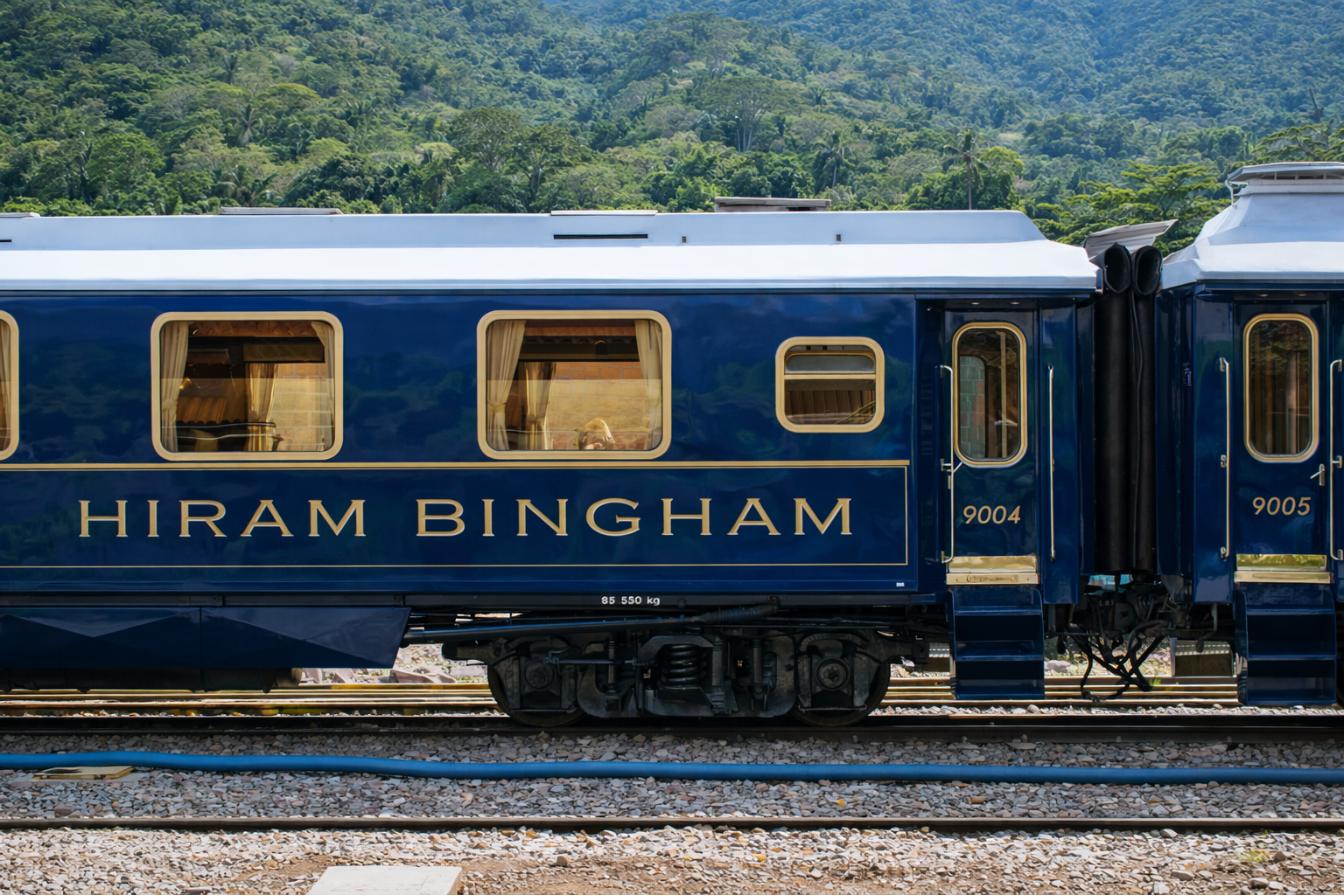
Neither should be confused with the luxury Hiram Bingham, which is a wholly different product. If you are still weighing the train options from Cusco to Machu Picchu, the quick hierarchy is simple: Expedition for price, Vistadome for views, Hiram Bingham for a full catered day. This blog is about the middle rung and whether it earns its premium over the cheapest seat.
| Feature | Standard Vistadome | Vistadome Observatory |
|---|---|---|
| Side windows | Oversized | Oversized, floor toward roof |
| Roof glass | Glass panels overhead | Fully transparent roof |
| Open-air deck | No | Yes, balcony behind railings |
| Dedicated bar car | No | Yes |
| Onboard show | Music, dance, fashion show | Music and dance in the observation car |
| Typical extra cost | Lower | A little more |
| Best for | Views and fun at a fair price | Photographers who want no glass in the way |
What do the panoramic windows and glass roof actually deliver?
The oversized side windows and roof glass open the view upward, which matters here because the track runs beneath steep canyon walls and cloud forest. You can look almost straight up at peaks and sky, not only out at the passing riverbank. On the tight, dramatic approach toward Aguas Calientes, that vertical view is exactly where the ordinary Expedition windows fall short.
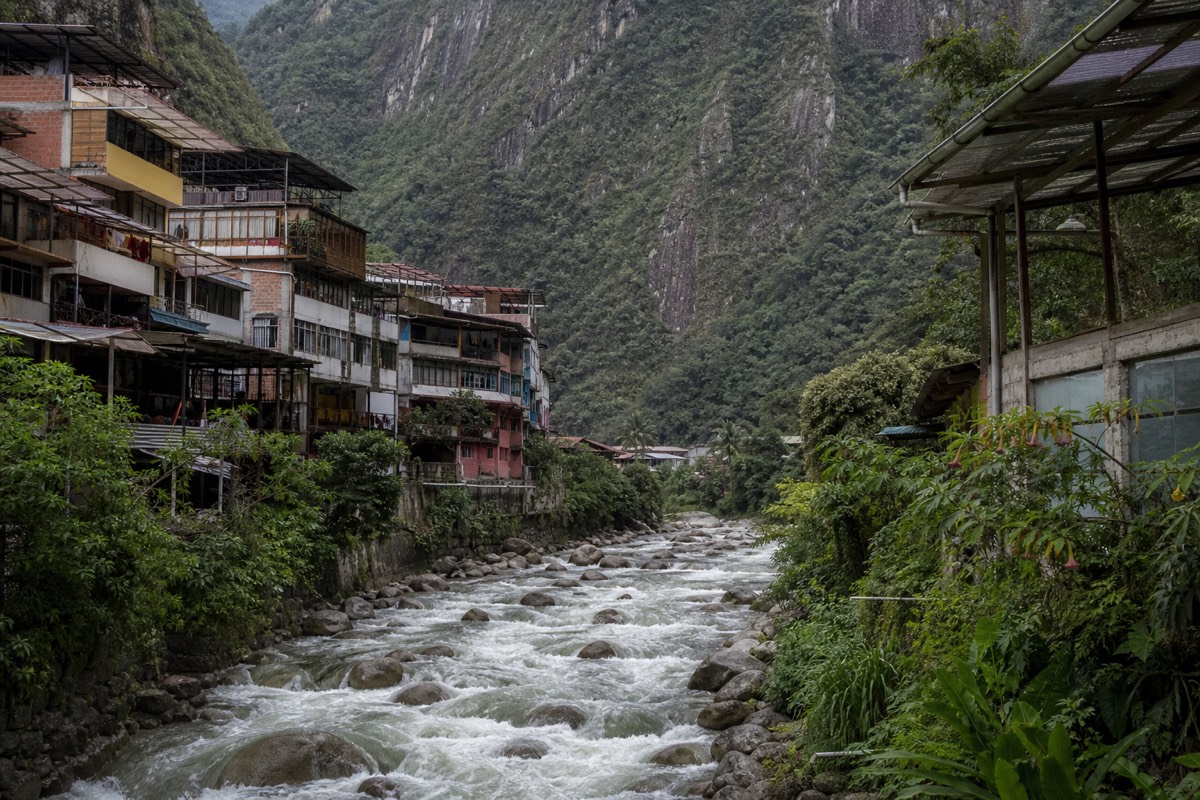
Picture the difference in practice. On the Expedition you still see plenty through standard side windows: the Urubamba river, farm terraces, the odd trackside village. What you miss is the sense of a valley closing in above you, the moment the walls rise so high that the sky narrows to a strip. The Vistadome's overhead glass captures that, and it is the single feature that earns the panoramic label rather than just marketing it.
Light does much of the work. On a clear dry-season morning the sun reaches down into the gorge and lights the far walls; in the wet months the same glass frames drifting cloud and wet-green forest, which some travellers actually prefer. Either way, the roof panels turn a pretty ride into something you watch actively. If your dates are still open, line the ride up with the best time to visit Machu Picchu, because clear light is what makes the panoramic windows pay off.
What happens on board: the music, dances and fashion show?
The Vistadome is not only about windows. On the return leg the crew turns the carriage into a small show: live Andean music, the masked Saqra dance, and a fashion parade where staff model baby-alpaca knitwear you can buy on board. It is unashamedly touristy, warm and a little theatrical, and it lands especially well with families travelling with children.
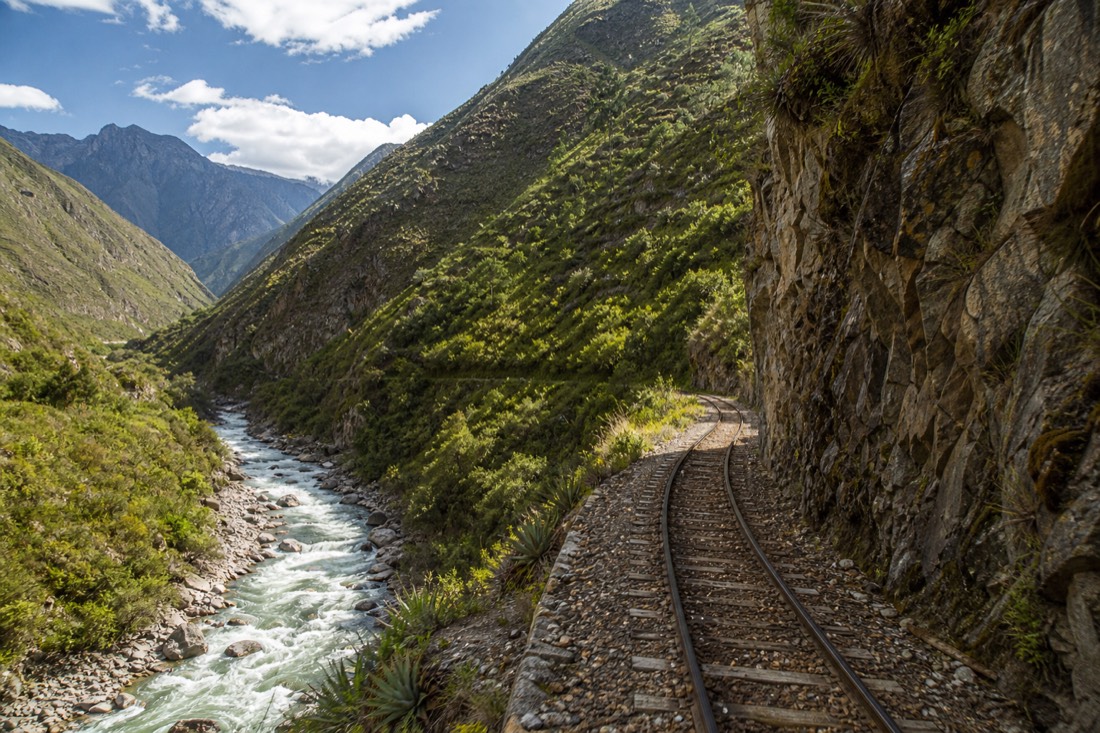
The rhythm runs roughly like this. The outbound morning trip is calmer, geared to scenery and a light snack, since most people are focused on reaching the citadel. The energy arrives on the way back, when musicians and dancers come out and the aisle becomes a runway. The Saqra is a traditional Andean masked dance, playful rather than solemn, and the alpaca show that follows is part entertainment, part shop, with jackets, shawls and scarves passed down the carriage.
Whether that delights or mildly embarrasses you is personal. Plenty of travellers find it a charming close to a big day; a handful would rather just watch the valley go by. Children almost always love it, which is worth weighing if you are planning a day trip to Machu Picchu from Cusco with kids and want the tired return leg to hold their attention.
What does it cost, and how does that compare to the Expedition and Hiram Bingham?
The Vistadome typically runs around $90 to $160 one way, against the Expedition's rough $60 to $100, so you pay a modest premium rather than doubling your outlay. The Hiram Bingham sits far above both: bare fares circulate around $500 to $660 one way, and the all-inclusive day bundle lands near $1,580. Always check the live listing, since fares swing with the departure slot and season.
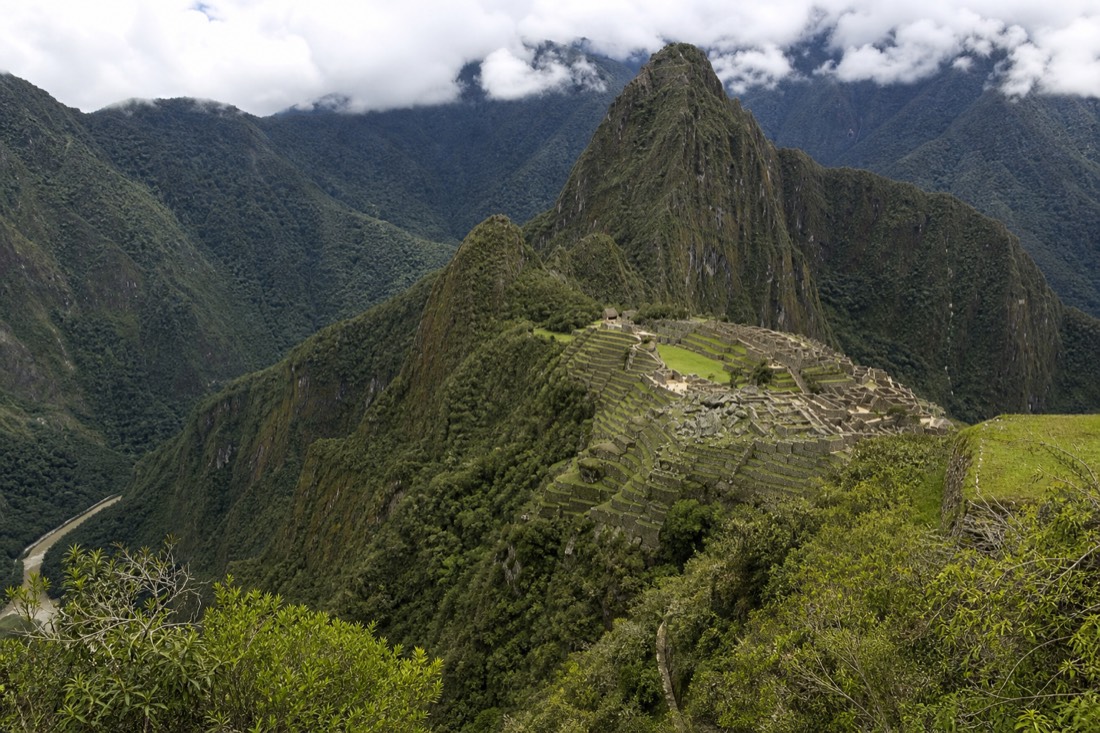
Train pricing on this line is never fixed. It moves with the departure time, the day of the week and the season, and PeruRail prices in US dollars for foreign visitors, so treat every number below as a band to sanity-check, not a quote. The gap that matters for this decision is the small one between Expedition and Vistadome. The gap up to the Hiram Bingham is a different order of spending, and comparing the two line for line misleads more than it helps.
| Service | Typical one-way fare | Round-trip, train only | What you get for the money |
|---|---|---|---|
| Expedition | ~$60 to $100 | ~$120 to $200 | Seat and side windows; snacks sold on board |
| Vistadome | ~$90 to $160 | ~$180 to $320 | Glass roof, light snack, return show |
| Vistadome Observatory | ~$100 to $170 | ~$200 to $340 | Vistadome plus open-air balcony and bar car |
| Hiram Bingham (full bundle) | Not sold one way | ~$1,580 | Meals, open bar, guide, entrance ticket, transfers |
Do not forget the Machu Picchu ticket if you ride a daytime train. A foreign-adult entry on a standard circuit sits around 152 soles, roughly $40, with mountain add-ons closer to 200 soles, and those figures shift, so confirm them when you buy your Machu Picchu entrance tickets and choose which circuit to book. The Vistadome fare does not include that ticket; the Hiram Bingham bundle does, which is a large part of why the headline prices are not comparing like with like.
Two more money notes decide it for a lot of people. If you want the luxury figures broken open, the cost of the Hiram Bingham ticket is set out in its own guide, and if you only want the plain headline number for the top train, the piece on how much the train costs answers it fast. Neither changes the Vistadome verdict: at its price, the daytime panoramic seat is rarely the wrong call.
Which seats and scenery segments matter most?
Book a window seat, then relax about which side you take, because the Urubamba river switches sides along the route and no single side wins the whole way. What matters more is the roof glass, which serves every seat, and the final canyon stretch near Aguas Calientes where the walls climb highest. On the Observatory, the open-air balcony is the spot that beats every seat.
If you want a rule of thumb rather than a superstition about seat numbers, use the terrain. The scenery builds as you drop from the high plateau into the valley and then into the narrowing gorge, so the best views come in the second half of the run, whichever direction you travel. A window seat on either side, plus a willingness to glance up through the roof glass and to walk to the balcony car if you booked the Observatory, gets you everything the train has to offer.
| Segment | What you see | Where to look |
|---|---|---|
| Cusco plateau to Poroy start | High farmland and wide open sky | Side windows, either side |
| Sacred Valley descent | Terraced fields, villages, the Urubamba river | The river side, which alternates |
| Past Ollantaytambo | Valley narrows, slopes turn greener | Side windows plus roof glass |
| Final canyon to Aguas Calientes | Steep walls, cloud forest, peaks overhead | Roof glass, then the balcony on the Observatory |
| Return leg | The onboard show, plus the same scenery in new light | Aisle for the show, windows between acts |
How does the panoramic train compare to the Hiram Bingham?
The Vistadome gives you the best daytime views for a modest fare. The Hiram Bingham gives you a full luxury day: brunch, an open bar, live music, a guided Machu Picchu visit, your entrance ticket and every transfer, on a restored 1920s-style train carrying only about 84 guests. It is a much larger jump in price, and it is worth it only when the experience itself is what you are buying.
Here is the thing people miss when weighing the panoramic train against luxury: they are not the same purchase scaled up. The Vistadome is a great seat with a great view. The Hiram Bingham is a catered event that happens to move along a railway, described by Belmond as a wood-panelled, brass-trimmed train with dining cars, a bar car and an open observation deck. One is about the window. The other is about the whole day, food and drink included.
| On board | Expedition | Vistadome | Hiram Bingham |
|---|---|---|---|
| Glass roof for the view | No | Yes | No, but an open observation deck |
| Onboard show | No | Music, dance, fashion show | Live music and dancing |
| Meals | Sold on board | Light snack | Brunch out, full meal back |
| Open bar | No | No | Yes, included |
| Guide and entrance ticket | Arrange yourself | Arrange yourself | Included |
| Typical price | ~$60 to $100 each way | ~$90 to $160 each way | ~$1,580 full day |
So the decision splits cleanly. If you want the scenery and a lively ride without a big spend, the Vistadome is the answer, and you can stop there happily. If a milestone trip, a honeymoon or a once-in-a-lifetime visit has you wanting the meal, the bar, the guide and zero logistics, the Hiram Bingham is a different kind of yes, and getting people onto that train is exactly what we do at Hiram Bingham Train Tickets. For the full three-way breakdown, the detailed comparison of the trains covers every row, including the Expedition service and where its economy fits.
Who is the panoramic train genuinely worth it for?
It is worth it for daytime riders who care about the view, for photographers, and for families who want the return show, all at a fair premium over the Expedition. It is not worth it for strict-budget travellers who only need to arrive, for anyone riding in the dark, or for those already booked on the Hiram Bingham. Match yourself to the row below.
There is no single right answer, only the right answer for your trip. Read the table as a starting point, then weigh it against your dates, your budget and how much the journey itself matters to you versus the hours on site. For most first-time visitors travelling in daylight, the Vistadome is the default because it upgrades the part of the day that would otherwise be dead transit time.
| Traveller | Worth it? | Why |
|---|---|---|
| Daytime rider who cares about the view | Yes | The glass roof is a real upgrade for a modest premium |
| Keen photographer | Yes, the Observatory | The open-air balcony removes the glass entirely |
| Family with young children | Yes | The return show holds tired young attention |
| Strict budget, only reaching the site | No | The Expedition uses the same track for less |
| Riding in the dark, first or last slot | No | The roof glass shows nothing after dusk |
| Already booked the Hiram Bingham | No | You would pay twice for the same scenery |
| Milestone or once-in-a-lifetime trip | Maybe, or splurge | Weigh the Vistadome against the full luxury day |
Who should skip the panoramic upgrade, and when?
Skip it if you are on a strict budget, riding in the dark, or already planning the Hiram Bingham. In those cases the Vistadome is either an expense you do not need or a middle step you will leapfrog. Everyone else, especially daytime riders who care about the view, tends to be glad they took it, so the skips are narrow and specific.
The clearest skip is the traveller who has already chosen the luxury train. Paying for a panoramic seat and then a Hiram Bingham seat means buying the same stretch of scenery twice. If the top train is in your plan, put the money there and ride it both ways. The second skip is anyone whose only goal is to arrive, for whom the Expedition does the job at the lowest cost on the same track.
The third, and the one people forget, is timing. A very early or very late departure can run in half-darkness through the best scenery, and the roof glass shows you nothing you cannot see. If your only available slot is at the edges of the day, save the difference and take the Expedition. Otherwise, for a daylight run in decent weather, the panoramic train earns its modest premium for most people, which is why it stays the default choice among the daytime services on the line.